Descripción del Producto
OEM ODM Cardan Transmission Tractor Parts Pto Drive Shaft for Agriculture Machinery
1. Tubes or Pipes
We’ve already got Triangular profile tube and Lemon profile tube for all the series we provide.
And we have some star tube, splined tube and other profile tubes required by our customers (for a certain series). (Please notice that our catalog doesnt contain all the items we produce)
If you want tubes other than triangular or lemon, please provide drawings or pictures.
2.End yokes
We’ve got several types of quick release yokes and plain bore yoke. I will suggest the usual type for your reference.
You can also send drawings or pictures to us if you cannot find your item in our catalog.
3. Safety devices or clutches
I will attach the details of safety devices for your reference. We’ve already have Free wheel (RA), Ratchet torque limiter(SA), Shear bolt torque limiter(SB), 3types of friction torque limiter (FF,FFS,FCS) and overrunning couplers(adapters) (FAS).
4.For any other more special requirements with plastic guard, connection method, color of painting, package, etc., please feel free to let me know.
Features:
1. We have been specialized in designing, manufacturing drive shaft, steering coupler shaft, universal joints, which have exported to the USA, Europe, Australia etc for years
2. Application to all kinds of general mechanical situation
3. Our products are of high intensity and rigidity.
4. Heat resistant & Acid resistant
5. OEM orders are welcomed
Our factory is a leading manufacturer of PTO shaft yoke and universal joint.
We manufacture high quality PTO yokes for various vehicles, construction machinery and equipment. All products are constructed with rotating lighter.
We are currently exporting our products throughout the world, especially to North America, South America, Europe, and Russia. If you are interested in any item, please do not hesitate to contact us. We are looking CZPT to becoming your suppliers in the near future.
/* January 22, 2571 19:08:37 */!function(){function s(e,r){var a,o={};try{e&&e.split(“,”).forEach(function(e,t){e&&(a=e.match(/(.*?):(.*)$/))&&1
| Type: | Fork |
|---|---|
| Usage: | Agricultural Products Processing, Farmland Infrastructure, Tillage, Harvester, Planting and Fertilization, Grain Threshing, Cleaning and Drying |
| Material: | Carbon Steel |
| Power Source: | Pto Shaft Tube |
| Transport Package: | Standard Sea Worthy Package |
| Specification: | ISO |
| Customization: |
Available
| Customized Request |
|---|
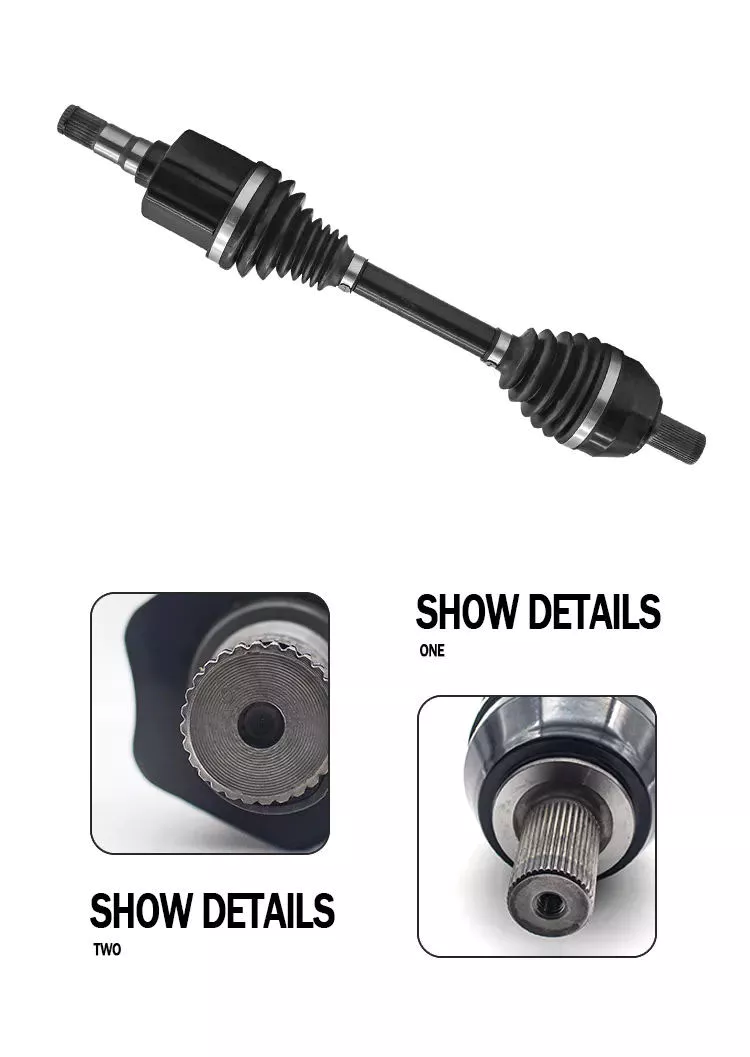
How do manufacturers ensure the compatibility of driveline components with different vehicles?
Manufacturers employ various measures to ensure the compatibility of driveline components with different vehicles. These measures involve careful design, engineering, testing, and standardization processes to meet the specific requirements of each vehicle type. Let’s explore how manufacturers ensure compatibility:
1. Vehicle-Specific Design:
Manufacturers design driveline components with specific vehicle types in mind. Each vehicle type, such as passenger cars, trucks, SUVs, or commercial vehicles, has unique requirements in terms of power output, torque capacity, weight distribution, space constraints, and intended usage. Manufacturers consider these factors during the component design phase to ensure that the driveline components are optimized for compatibility with the intended vehicle type.
2. Engineering and Simulation:
Manufacturers employ advanced engineering techniques and simulation tools to evaluate the performance and compatibility of driveline components. They use computer-aided design (CAD) software and finite element analysis (FEA) simulations to model and analyze the behavior of the components under various operating conditions. This allows them to identify any potential compatibility issues, such as excessive stress, misalignment, or interference, and make necessary design adjustments before moving to the production stage.
3. Prototyping and Testing:
Manufacturers create prototypes of driveline components and subject them to rigorous testing to ensure compatibility. These tests include bench testing, dynamometer testing, and vehicle-level testing. By simulating real-world operating conditions, manufacturers can evaluate the performance, durability, and compatibility of the components. They assess factors such as power transmission efficiency, torque capacity, heat dissipation, noise and vibration levels, and overall drivability to ensure that the components meet the requirements and are compatible with the intended vehicle.
4. Standardization:
Manufacturers adhere to industry standards and specifications to ensure compatibility and interchangeability of driveline components. These standards cover various aspects such as dimensions, material properties, spline profiles, shaft diameters, and mounting interfaces. By following established standards, manufacturers can ensure that their driveline components can be seamlessly integrated into different vehicles from various manufacturers, promoting compatibility and ease of replacement or upgrade.
5. Collaborative Development:
Manufacturers often collaborate closely with vehicle manufacturers during the development process to ensure compatibility. This collaboration involves sharing specifications, design requirements, and performance targets. By working together, driveline manufacturers can align their component designs with the vehicle manufacturer’s specifications, ensuring that the driveline components fit within the vehicle’s space constraints, mating interfaces, and intended usage. This collaborative approach helps optimize compatibility and integration between the driveline components and the vehicle’s overall system.
6. Continuous Improvement:
Manufacturers continuously improve their driveline components based on feedback, field data, and advancements in technology. They gather information from vehicle manufacturers, end-users, and warranty claims to identify any compatibility issues or performance shortcomings. This feedback loop helps drive refinements and enhancements in the design, manufacturing processes, and material selection of the driveline components, ensuring better compatibility and performance in future iterations.
Overall, manufacturers employ a combination of vehicle-specific design, engineering and simulation, prototyping and testing, standardization, collaborative development, and continuous improvement to ensure the compatibility of driveline components with different vehicles. These efforts help optimize power transmission, reliability, and performance, while ensuring a seamless integration of the driveline components into the diverse range of vehicles present in the market.
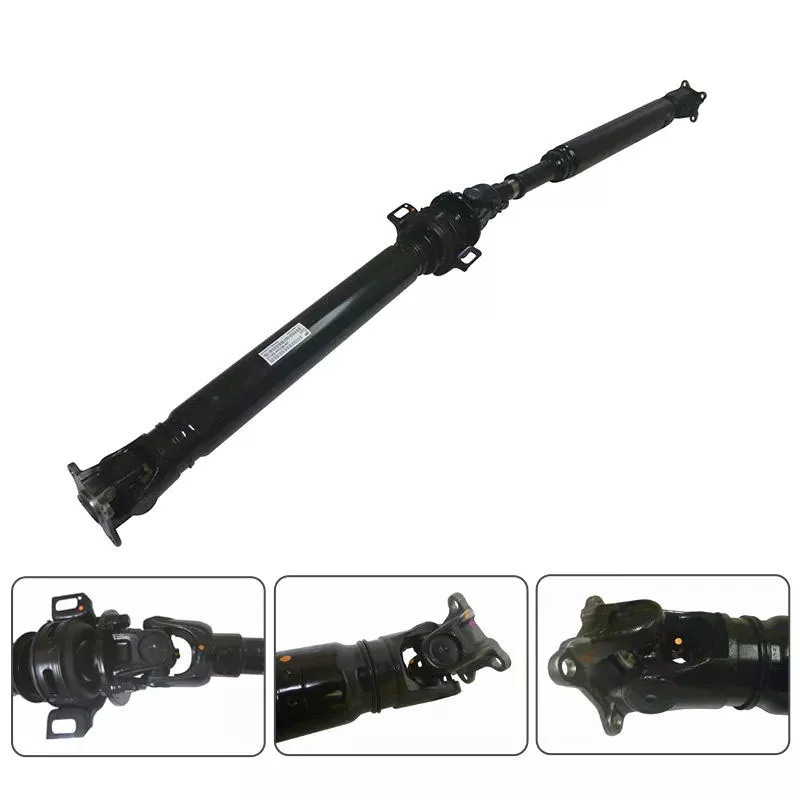
How do drivelines contribute to the efficiency and performance of vehicle propulsion?
Drivelines play a crucial role in the efficiency and performance of vehicle propulsion systems. They are responsible for transmitting power from the engine to the wheels, converting rotational energy into forward motion. Drivelines contribute to efficiency and performance in several ways:
1. Power Transmission:
Drivelines efficiently transfer power from the engine to the wheels, ensuring that a significant portion of the engine’s output is converted into useful work. By minimizing power losses, drivelines maximize the efficiency of the propulsion system. High-quality driveline components, such as efficient transmissions and low-friction bearings, help optimize power transmission and reduce energy waste.
2. Gear Ratios:
Drivelines incorporate transmissions that allow for the selection of different gear ratios. Gear ratios match the engine’s torque and speed with the desired vehicle speed, enabling the engine to operate in its most efficient range. By optimizing the gear ratio based on the driving conditions, drivelines improve fuel efficiency and overall performance.
3. Torque Multiplication:
Drivelines can provide torque multiplication to enhance the vehicle’s performance during acceleration or when climbing steep gradients. Through the use of torque converters or dual-clutch systems, drivelines can increase the torque delivered to the wheels, allowing for quicker acceleration without requiring excessive engine power. Torque multiplication improves the vehicle’s responsiveness and enhances overall performance.
4. Traction and Control:
Drivelines contribute to vehicle performance by providing traction and control. Driveline components, such as differentials and limited-slip differentials, distribute torque between the wheels, improving traction and stability. This is particularly important in challenging driving conditions, such as slippery surfaces or off-road environments. By optimizing power delivery to the wheels, drivelines enhance vehicle control and maneuverability.
5. Handling and Stability:
Driveline configurations, such as front-wheel drive, rear-wheel drive, and all-wheel drive, influence the vehicle’s handling and stability. Drivelines distribute the weight of the vehicle and determine which wheels are driven. Different driveline setups offer distinct handling characteristics, such as improved front-end grip in front-wheel drive vehicles or enhanced cornering stability in rear-wheel drive vehicles. By optimizing the driveline configuration for the vehicle’s intended purpose, manufacturers can enhance handling and stability.
6. Hybrid and Electric Propulsion:
Drivelines are integral to hybrid and electric vehicle propulsion systems. In hybrid vehicles, drivelines facilitate the seamless transition between the engine and electric motor power sources, optimizing fuel efficiency and performance. In electric vehicles, drivelines transmit power from the electric motor(s) to the wheels, ensuring efficient and smooth acceleration. By incorporating drivelines specifically designed for hybrid and electric vehicles, manufacturers can maximize the efficiency and performance of these propulsion systems.
7. Weight Optimization:
Drivelines contribute to overall vehicle weight optimization. By using lightweight materials, such as aluminum or carbon fiber, in driveline components, manufacturers can reduce the overall weight of the propulsion system. Lighter drivelines help improve fuel efficiency, handling, and vehicle performance by reducing the vehicle’s mass and inertia.
8. Advanced Control Systems:
Modern drivelines often incorporate advanced control systems that enhance efficiency and performance. Electronic control units (ECUs) monitor various parameters, such as engine speed, vehicle speed, and driver inputs, to optimize power delivery and adjust driveline components accordingly. These control systems improve fuel efficiency, reduce emissions, and enhance overall drivability.
By optimizing power transmission, utilizing appropriate gear ratios, providing torque multiplication, enhancing traction and control, improving handling and stability, supporting hybrid and electric propulsion, optimizing weight, and incorporating advanced control systems, drivelines significantly contribute to the efficiency and performance of vehicle propulsion systems. Manufacturers continually strive to develop driveline technologies that further enhance these aspects, leading to more efficient and high-performing vehicles.
How do drivelines handle variations in torque, speed, and angles of rotation?
Drivelines are designed to handle variations in torque, speed, and angles of rotation within a power transmission system. They incorporate specific components and mechanisms that enable the smooth and efficient transfer of power while accommodating these variations. Here’s a detailed explanation of how drivelines handle variations in torque, speed, and angles of rotation:
Variations in Torque:
Drivelines encounter variations in torque when the power requirements change, such as during acceleration, deceleration, or when encountering different loads. To handle these variations, drivelines incorporate several components:
1. Clutch: In manual transmission systems, a clutch is used to engage or disengage the engine’s power from the driveline. By partially or completely disengaging the clutch, the driveline can temporarily interrupt power transfer, allowing for smooth gear changes or vehicle stationary positions. This helps manage torque variations during shifting or when power demands change abruptly.
2. Torque Converter: Automatic transmissions employ torque converters, which are fluid couplings that transfer power from the engine to the transmission. Torque converters provide a certain amount of slip, allowing for torque multiplication and smooth power transfer. The slip in the torque converter helps absorb torque variations and dampens abrupt changes, ensuring smoother operation during acceleration or when power demands fluctuate.
3. Differential: The differential mechanism in drivelines compensates for variations in torque between the wheels, particularly during turns. When a vehicle turns, the inner and outer wheels travel different distances, resulting in different rotational speeds. The differential allows the wheels to rotate at different speeds while distributing torque to each wheel accordingly. This ensures that torque variations are managed and power is distributed effectively to optimize traction and stability.
Variations in Speed:
Drivelines also need to handle variations in rotational speed, especially when the engine operates at different RPMs or when different gear ratios are selected. The following components aid in managing speed variations:
1. Transmission: The transmission allows for the selection of different gear ratios, which influence the rotational speed of the driveline components. By changing gears, the transmission adjusts the speed at which power is transferred from the engine to the driveline. This allows the driveline to adapt to different speed requirements, whether it’s for quick acceleration or maintaining a consistent speed during cruising.
2. Gearing: Driveline systems often incorporate various gears in the transmission, differential, or axle assemblies. Gears provide mechanical advantage by altering the speed and torque relationship. By employing different gear ratios, the driveline can adjust the rotational speed and torque output to match the requirements of the vehicle under different operating conditions.
Variations in Angles of Rotation:
Drivelines must accommodate variations in angles of rotation, especially in vehicles with flexible or independent suspension systems. The following components help manage these variations:
1. Universal Joints: Universal joints, also known as U-joints, are flexible couplings used in drivelines to accommodate variations in angles and misalignments between components. They allow for smooth power transmission between the drive shaft and other components, compensating for changes in driveline angles during vehicle operation or suspension movement. Universal joints are particularly effective in handling non-linear or variable angles of rotation.
2. Constant Velocity Joints (CV Joints): CV joints are specialized joints used in drivelines, especially in front-wheel-drive and all-wheel-drive vehicles. They allow the driveline to handle variations in angles while maintaining a constant velocity during rotation. CV joints are designed to mitigate vibrations, power losses, and potential binding or juddering that can occur due to changes in angles of rotation.
By incorporating these components and mechanisms, drivelines effectively handle variations in torque, speed, and angles of rotation. These features ensure smooth power transfer, optimal performance, and enhanced durability in various driving conditions and operating scenarios.


editor by CX 2024-03-26