Product Description
Company Profile
Established in 2009, HangZhou CZPT Trading Co., Ltd is a professional supplier for conveyor parts, located in ZHangZhoug province. We focus on supplying a variety of conveyor parts, including conveyor tubes, conveyor frames, conveyor rollers, bearing housings and so forth.
With our professional technology R&D team, and experienced quality control department, our products have been awarded the ISO9001 Quality Management System Standard and our main markets are in America, Europe, Asia and Australia.
|
Factory advantage |
Professional and experienced technology team | ||
| All products inspected before shipping with reasonable prices | |||
| Low MOQ and free sample | |||
| We are audited by SGS and passed the ISO9001:2008 certification | |||
|
Industries service |
Industrial machine | ||
| Electronic and communication | |||
| Oil, gas,mining and petroleum | |||
| Construction industry | |||
| Equipment | CNC Machining Center, CNC Lathes, CNC Milling Machines, Punching and drilling machines, Stamping machines | ||
| Precision Processing | CNC machining, CNC turning and milling, laser cutting, drilling, grinding, bending, stamping, welding | ||
Roller size
| No. | Standard Diameter | Rentang Panjang (mm) |
Bearing Type Min-Max |
Shell Thickness of Roller | |
| mm | Inch | ||||
| 1 | 63.5 | 2 1/2 | 150-3500 | 203 204 | 3.0mm-4.0mm |
| 2 | 76 | 3 | 150-3500 | 204 | 3.0mm-4.5mm |
| 3 | 89 | 3 1/3 | 150-3500 | 204 205 | 3.0mm-4.5mm |
| 4 | 102 | 4 | 150-3500 | 3.2mm-4.5mm | |
| 5 | 108 | 4 1/4 | 150-3500 | 306 | 3.5mm-4.5mm |
| 6 | 114 | 4 1/2 | 150-3500 | 306 | 3.5mm-4.5mm |
| 7 | 127 | 5 | 150-3500 | 306 | 3.5mm-5.0mm |
| 8 | 133 | 5 1/4 | 150-3500 | 305 306 | 3.5mm-5.0mm |
| 9 | 140 | 5 1/2 | 150-3500 | 306 307 | 3.5mm-5.0mm |
| 10 | 152 | 6 | 150-3500 | 4.0mm-5.0mm | |
| 11 | 159 | 6 1/4 | 150-3500 | 4.0mm-5.0mm | |
| 12 | 165 | 6 1/2 | 150-3500 | 307 308 | 4.5mm-6.0mm |
| 13 | 177.8 | 7 | 150-3500 | 309 | 4.5mm-6.0mm |
| 14 | 190.7 | 7 1/2 | 150-3500 | 309 310 | 4.5mm-7.0mm |
| 15 | 194 | 7 5/8 | 150-3500 | 309 310 | 4.5mm-8.0mm |
| 16 | 219 | 8 5/8 | 150-3500 | 4.5mm-8.0mm | |
Advantage:
1.The life time: More than 50000 hours
2. TIR (Total Indicator Runout)
0.5mm (0.0197″) for Roll Length 0-600mm
0.8mm (0.571″) for Roll Length 601-1350mm
1.0mm (0. 0571 “) for Roll Length over 1350mm
3.Shaft Float≤0.8mm
4..Samples for testing are available.
5. Lower resistance
6. Small maintain work
7. High load capability
8. Dust proof & water proof
CONVRYOR ROLLER SHAFTS
| We can produce roller shafts and We do customeized |
| Product Size:φ10mm – 70mm |
| Max Length: 3000mm |
| Surface Tolerance: g6 |
| Surface Roughness:0.8mm |
| Spesifikasi | ASTM A108 AS1443 |
| Steel Grade | Q235B,C1571,C1045(we can also do other steel grade per your requirments) |
| Size | Φ18mm-φ62mm |
| Diameter Tolerance | ISO286-2,H7/H8 |
| Straightness | 2000:1 |
| O.D | 63.5-219.1mm |
| W .T | 0.45-20mm |
| Length | 6–12m |
| Standard | SANS 657/3,ASTM 513,AS 1163,BS6323,EN10305 |
| Material | Q235B, S355,S230,C350,E235 etc. |
| Technique | Welded,Seamless |
| Surface | oiled ,galvanized or painted with all kinds of colors according to client’s request. |
| Ends | 1.Plain ends, |
| 2.Threading at both side with plastice caps | |
| 3.Threading at both side with socket/coupling. | |
| 4.Beveled ends, and so on | |
| Packing | 1.Water-proof plastic cloth, |
| 2.Woven bags, | |
| 3.PVC package, | |
| 4.Steel strips in bundles | |
| 5.As your requirment | |
| Usage | 1.For low pressure liquid delivery such as water,gas and oil. |
| 2.For construction | |
| 3.Mechanical equipment | |
| 4.For Furniture | |
| Payment&Trade Terms | 1.Payment : T/T,L/C, D/P, Western union |
| 2.Trade Terms:FOB/CFR/CIF | |
| 3.Minimum quantity of order : 10 MT (10,000KGS) | |
| Delivery Time | 1.Usually,within10-20days after receiving your down payment. |
| 2.According to the order quantity |
Conveyor Roller Tube
|
Conveyor Roller Tube |
Spesifikasi | SANS657/3,ASTM513,AS1163,BS6323,EN10305 or equivalent international standard. |
| Steel grade | S355/S230,C350,E235,Q235B | |
| Sizes | 63.5mm-219.1mm ect | |
| Ovality tolerance of body | ≤0.4mm(60.3mm-152.4mm) | |
| ≤0.5mm(159MM-168.3mm) | ||
| ≤0.6mm(178mm-219mm) | ||
| Straightness | 2000:1 |
if you are interesting in our products or want any further information, please feel free to contact us!
I am looking CZPT to your reply.
Best regards
Ruth
HangZhou CZPT TRADING CO., LTD
1801 CZPT Building, No.268 Xierhuan Road, HangZhou City, ZHangZhoug Province, China
/* March 10, 2571 17:59:20 */!function(){function s(e,r){var a,o={};try{e&&e.split(“,”).forEach(function(e,t){e&&(a=e.match(/(.*?):(.*)$/))&&1
| Steel Grade: | C1018 C1020 |
|---|---|
| Standard: | ASTM A108 |
| Size: | Od18mm—62mm |
| Surface Tolerance: | G6 |
| Max Length: | Max 3000mm |
| Surface Roughness: | 0.8 |
| Samples: |
US$ 0/Piece
1 Piece(Min.Order) | |
|---|
| Customization: |
Available
| Customized Request |
|---|
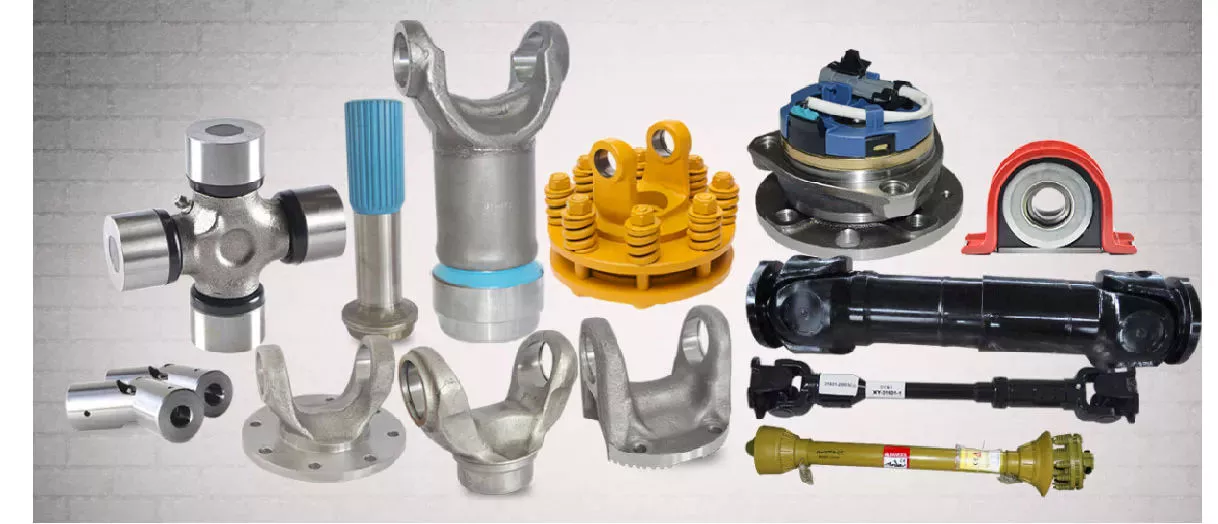
Are there different types of driveline configurations based on vehicle type?
Yes, there are different types of driveline configurations based on the type of vehicle. Driveline configurations vary depending on factors such as the vehicle’s propulsion system, drivetrain layout, and the number of driven wheels. Here’s a detailed explanation of the driveline configurations commonly found in different vehicle types:
1. Front-Wheel Drive (FWD):
In front-wheel drive vehicles, the driveline configuration involves the engine’s power being transmitted to the front wheels. The engine, transmission, and differential are typically integrated into a single unit called a transaxle, which is located at the front of the vehicle. This configuration simplifies the drivetrain layout, reduces weight, and improves fuel efficiency. Front-wheel drive is commonly found in passenger cars, compact cars, and some crossover SUVs.
2. Rear-Wheel Drive (RWD):
Rear-wheel drive vehicles have their driveline configuration where the engine’s power is transmitted to the rear wheels. In this setup, the engine is located at the front of the vehicle, and the drivetrain components, including the transmission and differential, are positioned at the rear. Rear-wheel drive provides better weight distribution, improved handling, and enhanced performance characteristics, making it popular in sports cars, luxury vehicles, and large trucks.
3. All-Wheel Drive (AWD) and Four-Wheel Drive (4WD):
All-wheel drive and four-wheel drive driveline configurations involve power being transmitted to all four wheels of the vehicle. These configurations provide better traction and handling in various driving conditions, particularly on slippery or off-road surfaces. AWD systems distribute power automatically between the front and rear wheels, while 4WD systems are often manually selectable and include a transfer case for shifting between 2WD and 4WD modes. AWD and 4WD configurations are commonly found in SUVs, crossovers, trucks, and off-road vehicles.
4. Front Engine, Rear-Wheel Drive (FR) and Rear Engine, Rear-Wheel Drive (RR):
In certain performance vehicles and sports cars, driveline configurations may involve a front engine with rear-wheel drive (FR) or a rear engine with rear-wheel drive (RR). FR configurations have the engine located at the front of the vehicle, transmitting power to the rear wheels. RR configurations have the engine located at the rear, driving the rear wheels. These configurations provide excellent balance, weight distribution, and handling characteristics, resulting in enhanced performance and driving dynamics.
5. Other Configurations:
There are also various specialized driveline configurations based on specific vehicle types and applications:
- Mid-Engine: Some high-performance sports cars and supercars feature a mid-engine configuration, where the engine is positioned between the front and rear axles. This configuration offers exceptional balance, handling, and weight distribution.
- Front-Engine, Front-Wheel Drive (FF): While less common, certain compact and economy cars employ a front-engine, front-wheel drive configuration. This layout simplifies packaging and interior space utilization.
- Part-Time 4WD: In certain off-road vehicles, there may be a part-time 4WD driveline configuration. These vehicles typically operate in 2WD mode but can engage 4WD when additional traction is needed.
These are some of the driveline configurations commonly found in different vehicle types. The choice of driveline configuration depends on factors such as the vehicle’s intended use, performance requirements, handling characteristics, and specific design considerations.
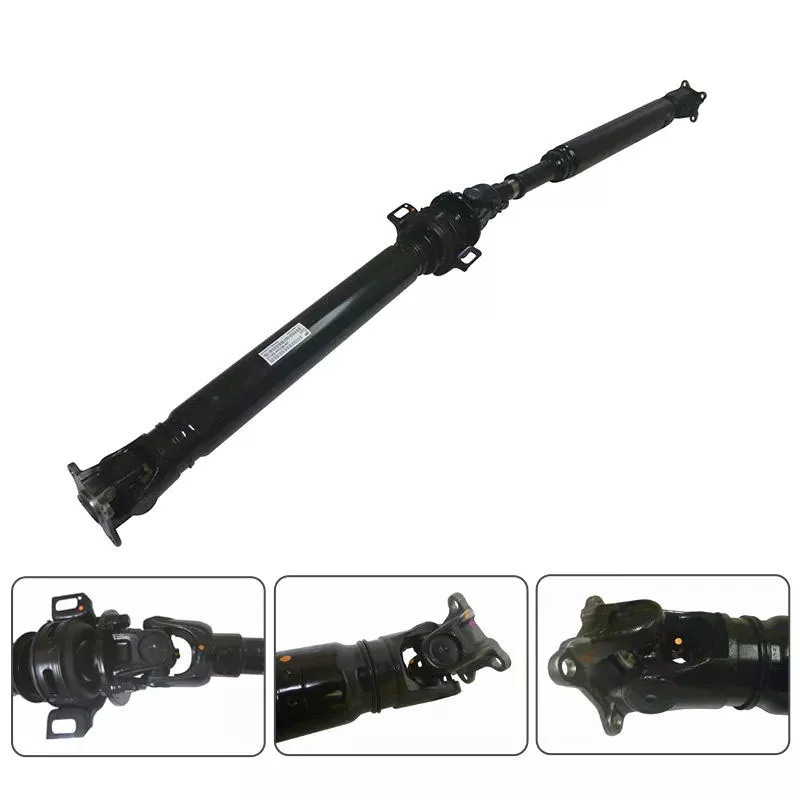
How do drivelines contribute to the efficiency and performance of vehicle propulsion?
Drivelines play a crucial role in the efficiency and performance of vehicle propulsion systems. They are responsible for transmitting power from the engine to the wheels, converting rotational energy into forward motion. Drivelines contribute to efficiency and performance in several ways:
1. Power Transmission:
Drivelines efficiently transfer power from the engine to the wheels, ensuring that a significant portion of the engine’s output is converted into useful work. By minimizing power losses, drivelines maximize the efficiency of the propulsion system. High-quality driveline components, such as efficient transmissions and low-friction bearings, help optimize power transmission and reduce energy waste.
2. Gear Ratios:
Drivelines incorporate transmissions that allow for the selection of different gear ratios. Gear ratios match the engine’s torque and speed with the desired vehicle speed, enabling the engine to operate in its most efficient range. By optimizing the gear ratio based on the driving conditions, drivelines improve fuel efficiency and overall performance.
3. Torque Multiplication:
Drivelines can provide torque multiplication to enhance the vehicle’s performance during acceleration or when climbing steep gradients. Through the use of torque converters or dual-clutch systems, drivelines can increase the torque delivered to the wheels, allowing for quicker acceleration without requiring excessive engine power. Torque multiplication improves the vehicle’s responsiveness and enhances overall performance.
4. Traction and Control:
Drivelines contribute to vehicle performance by providing traction and control. Driveline components, such as differentials and limited-slip differentials, distribute torque between the wheels, improving traction and stability. This is particularly important in challenging driving conditions, such as slippery surfaces or off-road environments. By optimizing power delivery to the wheels, drivelines enhance vehicle control and maneuverability.
5. Handling and Stability:
Driveline configurations, such as front-wheel drive, rear-wheel drive, and all-wheel drive, influence the vehicle’s handling and stability. Drivelines distribute the weight of the vehicle and determine which wheels are driven. Different driveline setups offer distinct handling characteristics, such as improved front-end grip in front-wheel drive vehicles or enhanced cornering stability in rear-wheel drive vehicles. By optimizing the driveline configuration for the vehicle’s intended purpose, manufacturers can enhance handling and stability.
6. Hybrid and Electric Propulsion:
Drivelines are integral to hybrid and electric vehicle propulsion systems. In hybrid vehicles, drivelines facilitate the seamless transition between the engine and electric motor power sources, optimizing fuel efficiency and performance. In electric vehicles, drivelines transmit power from the electric motor(s) to the wheels, ensuring efficient and smooth acceleration. By incorporating drivelines specifically designed for hybrid and electric vehicles, manufacturers can maximize the efficiency and performance of these propulsion systems.
7. Weight Optimization:
Drivelines contribute to overall vehicle weight optimization. By using lightweight materials, such as aluminum or carbon fiber, in driveline components, manufacturers can reduce the overall weight of the propulsion system. Lighter drivelines help improve fuel efficiency, handling, and vehicle performance by reducing the vehicle’s mass and inertia.
8. Advanced Control Systems:
Modern drivelines often incorporate advanced control systems that enhance efficiency and performance. Electronic control units (ECUs) monitor various parameters, such as engine speed, vehicle speed, and driver inputs, to optimize power delivery and adjust driveline components accordingly. These control systems improve fuel efficiency, reduce emissions, and enhance overall drivability.
By optimizing power transmission, utilizing appropriate gear ratios, providing torque multiplication, enhancing traction and control, improving handling and stability, supporting hybrid and electric propulsion, optimizing weight, and incorporating advanced control systems, drivelines significantly contribute to the efficiency and performance of vehicle propulsion systems. Manufacturers continually strive to develop driveline technologies that further enhance these aspects, leading to more efficient and high-performing vehicles.

What is a driveline and how does it function in vehicles and machinery?
A driveline, also known as a drivetrain, refers to the components and systems responsible for transmitting power from the engine to the wheels or tracks in vehicles and machinery. It encompasses various elements such as the engine, transmission, drive shafts, differentials, axles, and wheels or tracks. The driveline plays a crucial role in converting the engine’s power into motion and enabling the vehicle or machinery to move. Here’s a detailed explanation of how the driveline functions in vehicles and machinery:
1. Power Generation: The driveline starts with the engine, which generates power by burning fuel or utilizing alternative energy sources. The engine produces rotational force, known as torque, which is transferred to the driveline for further transmission to the wheels or tracks.
2. Transmission: The transmission is a crucial component of the driveline that controls the distribution of power and torque from the engine to the wheels or tracks. It allows the driver or operator to select different gear ratios to optimize performance and efficiency based on the vehicle’s speed and load conditions. The transmission can be manual, automatic, or a combination of both, depending on the specific vehicle or machinery.
3. Drive Shaft: The drive shaft, also called a propeller shaft, is a rotating mechanical component that transmits torque from the transmission to the wheels or tracks. In vehicles with rear-wheel drive or four-wheel drive, the drive shaft transfers power to the rear axle or all four wheels. In machinery, the drive shaft may transfer power to the tracks or other driven components. The drive shaft is typically a tubular metal shaft with universal joints at each end to accommodate the movement and misalignment between the transmission and the wheels or tracks.
4. Differential: The differential is a device located in the driveline that enables the wheels or tracks to rotate at different speeds while still receiving power. It allows the vehicle or machinery to smoothly negotiate turns without wheel slippage or binding. The differential consists of a set of gears that distribute torque between the wheels or tracks based on their rotational requirements. In vehicles with multiple axles, there may be differentials on each axle to provide power distribution and torque balancing.
5. Axles: Axles are shafts that connect the differential to the wheels or tracks. They transmit torque from the differential to the individual wheels or tracks, allowing them to rotate and propel the vehicle or machinery. Axles are designed to withstand the loads and stresses associated with power transmission and wheel movement. They may be solid or independent, depending on the vehicle or machinery’s suspension and drivetrain configuration.
6. Wheels or Tracks: The driveline’s final components are the wheels or tracks, which directly contact the ground and provide traction and propulsion. In vehicles with wheels, the driveline transfers power from the engine to the wheels, allowing them to rotate and propel the vehicle forward or backward. In machinery with tracks, the driveline transfers power to the tracks, enabling the machinery to move over various terrains and surfaces.
7. Functioning: The driveline functions by transmitting power from the engine through the transmission, drive shaft, differential, axles, and finally to the wheels or tracks. As the engine generates torque, it is transferred through the transmission, which selects the appropriate gear ratio based on the vehicle’s speed and load. The drive shaft then transfers the torque to the differential, which distributes it between the wheels or tracks according to their rotational requirements. The axles transmit the torque from the differential to the individual wheels or tracks, allowing them to rotate and propel the vehicle or machinery.
8. Four-Wheel Drive and All-Wheel Drive: Some vehicles and machinery are equipped with four-wheel drive (4WD) or all-wheel drive (AWD) systems, which provide power to all four wheels simultaneously. In these systems, the driveline includes additional components such as transfer cases and secondary differentials to distribute power to the front and rear axles. The driveline functions similarly in 4WD and AWD systems, but with enhanced traction and off-road capabilities.
In summary, the driveline is a vital component in vehicles and machinery, responsible for transmitting power from the engine to the wheels or tracks. It involves the engine, transmission, drive shafts, differentials, axles, and wheels or tracks. By efficiently transferring torque and power, the driveline enables vehicles and machinery to move, providing traction, propulsion, and control. The specific configuration and components of the driveline may vary depending on the vehicle or machinery’s design, purpose, and drive system.


editor by CX 2024-02-18