Product Description
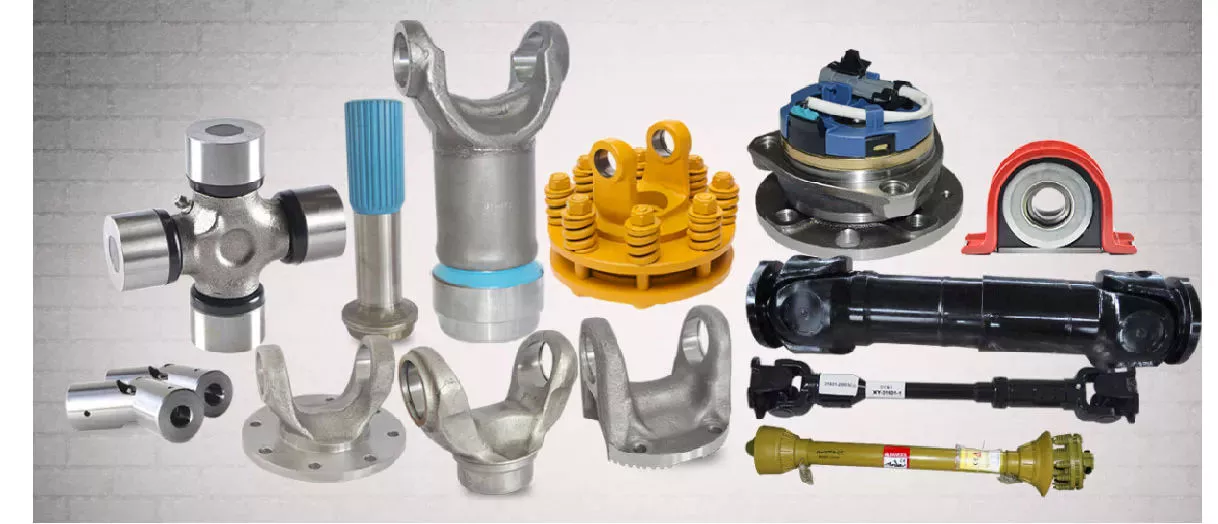
Tractor Pto Driveshaft Driveline Factory Hollow Spline Cardan Adapter Universal Joint Yoke Flexible Front Prop Rear CV Axle Propeller Automobile Drive Shaft
Product Description
Agricultural truck universal joint steering
PTO Shaft
| Function of PTO Shaft | Drive Shaft Parts & Power Transmission |
| Usage of PTO Shaft | Kinds of Tractors & Farm Implements |
| Yoke Types for PTO Shaft | Double push pin, Bolt pins, Split pins, Pushpin, Quick release, Ball attachment, Collar….. |
| Processing Of Yoke | Forging |
| PTO Shaft Plastic Cover | YW; BW; YS; BS; Etc |
| Colors of PTO Shaft | Green; Orange; Yellow; Black Ect. |
| PTO Shaft Series | T1-T10; L1-L6;S6-S10;10HP-150HP with SA,RA,SB,SFF,WA,CV Etc |
| Tube Types for PTO Shaft | Lemon, Triangular, Star, Square, Hexangular, Spline, Special Ect |
| Processing Of Tube | Cold drawn |
| Spline Types for PTO Shaft | 1 1/8″ Z6;1 3/8″ Z6; 1 3/8″ Z21 ;1 3/4″ Z20; 1 3/4″ Z6; 8-38*32*6 8-42*36*7; 8-48*42*8; |
We also sell accessories for the pto shaft, including :
Yoke: CV socket yoke, CV weld yoke, flange yoke, end yoke, weld yoke, slip yoke
CV center housing, tube, spline, CV socket flange, u-joint, dust cap
Light vehicle drive line
Our products can be used for transmission shafts of the following brands
Toyota, Mitsubishi, Nissan, Isu zu, Suzuki, Dafa, Honda, Hyundai, Mazda, Fiat, Re nault, Kia, Dacia, Ford. Dodge, Land Rover, Peu geot, Volkswagen Audi, BMW Benz Volvo, Russian models
Gear shaft
Company Profile
Related Products
Application:
Company information:
/* March 10, 2571 17:59:20 */!function(){function s(e,r){var a,o={};try{e&&e.split(“,”).forEach(function(e,t){e&&(a=e.match(/(.*?):(.*)$/))&&1
| Material: | Carbon Steel |
|---|---|
| Load: | Drive Shaft |
| Stiffness & Flexibility: | Stiffness / Rigid Axle |
| Journal Diameter Dimensional Accuracy: | IT6-IT9 |
| Axis Shape: | Straight Shaft |
| Shaft Shape: | Real Axis |
| Samples: |
US$ 38/Piece
1 Piece(Min.Order) | |
|---|
What factors should be considered when selecting the appropriate PTO driveline for an application?
When selecting the appropriate PTO (Power Take-Off) driveline for an application, several factors need to be considered to ensure optimal performance, efficiency, and safety. Here are some key factors to take into account:
1. Power Requirements:
– Determine the power requirements of the driven equipment. Consider the horsepower (HP) or kilowatt (kW) rating necessary to operate the equipment effectively. The PTO driveline should be capable of transmitting the required power without overloading or damaging the driveline components.
2. Speed and RPM:
– Identify the desired operating speed and RPM (Rotations Per Minute) of the driven equipment. The PTO driveline should be compatible with the required speed range to ensure efficient power transmission. Consider the maximum and minimum RPM ratings of the driveline and select one that matches the specific speed requirements of the application.
3. Torque Requirements:
– Determine the torque requirements of the driven equipment. Torque is the rotational force required to perform the intended task. Consider both the maximum and average torque demands during operation. Ensure that the selected PTO driveline can handle the torque levels without exceeding its maximum torque capacity or causing premature wear or failure.
4. Application Type:
– Consider the specific application and the type of equipment involved. Different applications may require different PTO driveline designs and features. For example, agricultural equipment such as mowers, balers, or tillers may benefit from a constant velocity (CV) PTO driveline to accommodate varying angles and speeds, while stationary equipment like generators or water pumps may use a non-constant velocity (non-CV) PTO driveline.
5. Safety Considerations:
– Evaluate the safety requirements of the application. Certain applications may require additional safety features such as shear bolts or slip clutches to protect against excessive loads, sudden obstructions, or torque spikes. Ensure that the selected PTO driveline incorporates the necessary safety mechanisms to prevent damage to the driveline and equipment, as well as to ensure the safety of operators and bystanders.
6. Durability and Maintenance:
– Consider the durability and maintenance requirements of the PTO driveline. Evaluate the quality and reliability of the driveline components, such as bearings, joints, and couplings. Choose a driveline that is built to withstand the demands of the application and requires minimal maintenance to ensure long-term performance and reduce downtime.
7. Compatibility:
– Ensure compatibility between the PTO driveline and the power source (e.g., tractor, engine). Consider the PTO driveline’s connection type, size (e.g., spline count, shaft diameter), and mounting configuration to ensure a proper fit and connection with the power source.
8. Environmental Conditions:
– Take into account the environmental conditions in which the PTO driveline will operate. Factors such as temperature extremes, exposure to moisture, dust, or chemicals can impact the driveline’s performance and longevity. Choose a driveline that is designed to withstand the specific environmental conditions of the application.
9. Manufacturer and Quality:
– Consider the reputation and reliability of the PTO driveline manufacturer. Opt for reputable manufacturers known for producing high-quality and durable driveline systems. Research customer reviews and seek recommendations from industry experts to ensure you choose a reliable and reputable brand.
By carefully considering these factors, you can select the most appropriate PTO driveline for your specific application. It is recommended to consult with manufacturers, industry experts, or equipment dealers to get further guidance and ensure the right driveline selection for your needs.

How do PTO drivelines enhance the performance of tractors and agricultural equipment?
PTO (Power Take-Off) drivelines play a crucial role in enhancing the performance of tractors and agricultural equipment. By providing a reliable and versatile power source, PTO drivelines improve the functionality, efficiency, and productivity of agricultural machinery. Here are several ways in which PTO drivelines enhance the performance of tractors and agricultural equipment:
1. Power Versatility:
– PTO drivelines enable tractors and agricultural equipment to utilize a wide range of power-driven implements and attachments. By connecting to the PTO shaft of a tractor, implements such as mowers, tillers, seeders, and balers can be powered directly, eliminating the need for separate engines or motors. This versatility allows farmers to perform multiple tasks using a single power source, reducing equipment redundancy and increasing operational efficiency.
2. Increased Efficiency:
– PTO drivelines contribute to increased efficiency by providing a direct power transfer mechanism. The driveline ensures minimal power loss during transmission, resulting in more efficient utilization of available power. This efficiency leads to improved performance and reduced fuel consumption, ultimately optimizing resource utilization and lowering operating costs.
3. Flexibility in Equipment Usage:
– PTO drivelines offer flexibility in equipment usage by allowing quick and easy attachment and detachment of implements. Farmers can rapidly switch between different implements, tailoring the equipment to suit specific tasks and field conditions. This flexibility enhances productivity as it reduces downtime associated with changing equipment, enabling farmers to adapt to changing agricultural needs efficiently.
4. Time Savings:
– PTO drivelines contribute to time savings by enabling faster and more efficient completion of agricultural tasks. Machinery powered by PTO drivelines can operate at higher speeds and cover larger areas, reducing the time required for tasks such as mowing, tilling, planting, and harvesting. Additionally, the direct power transfer provided by PTO drivelines eliminates the need for manual labor or slower power transmission methods, further enhancing productivity and time efficiency.
5. Enhanced Capability:
– PTO drivelines enhance the capability of tractors and agricultural equipment by enabling them to handle a broader range of tasks and operate specialized implements. For example, PTO-driven sprayers allow precise and efficient spraying of fertilizers and pesticides, ensuring optimal crop health. PTO-driven balers enable efficient baling and packaging of hay or other forage materials. The versatility and enhanced capability provided by PTO drivelines allow farmers to expand their operations and achieve higher levels of productivity.
6. Consistent Power Delivery:
– PTO drivelines ensure consistent power delivery to agricultural equipment, resulting in consistent and uniform operation. The power from the tractor or power source is transmitted directly to the driven machinery, maintaining a steady power input. Consistent power delivery helps ensure optimum performance, reducing variations in output quality and minimizing the need for rework or adjustments.
7. Improved Safety:
– PTO drivelines contribute to improved safety by reducing the need for direct operator interaction with moving parts. Implements and machinery powered by PTO drivelines often have guards and safety features in place to protect operators from potential hazards. Additionally, the direct power transfer eliminates the need for manual belt or chain drives, reducing the risk of entanglement or mechanical failures.
8. Advanced Technology Integration:
– PTO drivelines enable the integration of advanced technologies and features into agricultural equipment. For example, PTO-driven machinery can incorporate precision farming technologies, such as GPS guidance systems, automatic controls, and variable-rate application capabilities. These technologies enhance accuracy, efficiency, and input optimization, resulting in improved performance and increased yields.
Overall, PTO drivelines significantly enhance the performance of tractors and agricultural equipment by providing a versatile power source, increasing efficiency, enabling flexibility in equipment usage, saving time, enhancing capability, ensuring consistent power delivery, improving safety, and facilitating the integration of advanced technologies. These advantages contribute to increased productivity, improved operational effectiveness, and enhanced profitability in agricultural operations.
How do PTO drivelines handle variations in speed, torque, and angles during operation?
PTO (Power Take-Off) drivelines are designed to handle variations in speed, torque, and angles during operation, ensuring efficient power transmission between the power source (such as a tractor engine) and the driven equipment. Here’s how PTO drivelines handle these variations:
Variations in Speed:
PTO drivelines accommodate variations in speed through the use of different mechanisms, depending on the type of driveline. Here are two common methods:
1. Constant Velocity (CV) Joints: CV joints are commonly used in CV PTO drivelines to maintain a constant speed and smooth power transmission, even when the driven equipment operates at varying angles or speeds. CV joints allow the driveline to transmit power without a significant increase in vibration or power loss. These joints consist of specially designed bearings and races that allow for a constant angular velocity, regardless of the operating angle of the driveline. This ensures that the driven equipment receives a consistent and uniform power supply, even as the speed varies.
2. Variable Pulleys or Clutches: In some non-CV PTO drivelines or applications, variable pulleys or clutches can be used to adjust the speed ratio between the power source and the driven equipment. By changing the position of the pulleys or adjusting the clutch engagement, the effective diameter of the pulleys or the contact area of the clutch can be altered, allowing for speed adjustments. This enables operators to match the speed of the driven equipment to the desired operational requirements, accommodating variations in speed during operation.
Variations in Torque:
PTO drivelines are designed to handle variations in torque, ensuring efficient power transmission even when the torque requirements change. Here are two common methods used to handle torque variations:
1. Slip Clutches: Slip clutches are commonly used in PTO drivelines to protect the driveline and driven equipment from excessive torque or sudden shock loads. These clutches incorporate a mechanism that allows the driveline to slip or disengage momentarily when the torque exceeds a certain threshold. This slipping action protects against damage by relieving the excess torque and allows the equipment to continue operating once the resistance is removed. Slip clutches provide a safety measure to prevent driveline and equipment damage due to sudden changes in torque.
2. Shear Bolts: Shear bolts are another method used to handle torque variations in PTO drivelines. These bolts are designed to break and disconnect the power transmission when the torque exceeds a certain threshold. By breaking the shear bolts, the driveline and equipment are protected from excessive torque, preventing damage. Shear bolts are commonly used in applications where sudden obstructions or excessive loads can occur, such as in rotary cutters or flail mowers.
Variations in Angles:
PTO drivelines are engineered to accommodate variations in operating angles. Here’s how they handle angle variations:
1. Flexible Design: PTO drivelines are often designed with flexibility in mind, allowing for slight misalignments and variations in operating angles. Flexible couplings or telescopic sections within the driveline can help compensate for angular misalignments, ensuring smooth power transmission even when the driven equipment operates at an angle. These flexible components can absorb and accommodate the movement and misalignment between the power source and the driven equipment, reducing stress and potential damage to the driveline.
2. Articulating Joints: Some PTO drivelines incorporate articulating joints, such as universal joints or CV joints, to handle variations in operating angles. These joints allow for movement and flexibility, accommodating changes in angle without compromising power transmission. Universal joints can handle up to 30 degrees of angular misalignment, while CV joints can handle even greater angles, providing a smooth and continuous power transfer across a range of operating angles.
By incorporating these design features and mechanisms, PTO drivelines effectively handle variations in speed, torque, and angles during operation. This ensures reliable and efficient power transmission between the power source and the driven equipment, allowing for optimal performance and productivity in a wide range of agricultural and industrial applications.


editor by CX 2024-01-25