คำอธิบายผลิตภัณฑ์
ท่านสามารถดูรายละเอียดคุณสมบัติได้ด้านล่างนี้:
บริษัท หางโจว มาสเตอร์รี่ แมชชีนเนอรี่ เทคโนโลยี จำกัด ช่วยให้ผู้ผลิตและแบรนด์ต่างๆ สามารถผลิตชิ้นส่วนเครื่องจักรที่มีความแม่นยำสูงได้ ผลิตภัณฑ์เครื่องจักรที่มีความแม่นยำสูง เช่น เพลา สกรูตัวหนอน บูช ข้อต่อ คัปปลิ้ง... ผลิตภัณฑ์ของเราถูกนำไปใช้อย่างกว้างขวางในมอเตอร์ไฟฟ้า เพลาหลักของเครื่องยนต์ เพลาส่งกำลังในเกียร์ คัปปลิ้ง เครื่องพิมพ์ ปั๊ม โดรน และอื่นๆ อีกมากมาย ผลิตภัณฑ์ของเราตอบสนองความต้องการของอุตสาหกรรมต่างๆ รวมถึงยานยนต์ อุตสาหกรรม เครื่องมือไฟฟ้า เครื่องมือทำสวน การดูแลสุขภาพ บ้านอัจฉริยะ ฯลฯ
บริษัท Mastery ให้บริการแก่อุตสาหกรรมต่างๆ โดยนำเสนอเพลาคาร์ดาน เพลาปั๊ม และบูชคุณภาพสูงที่มีขนาดเส้นผ่านศูนย์กลางหลากหลายตั้งแต่ 3 มม. ถึง 50 มม. ผลิตภัณฑ์ของเราได้รับการออกแบบมาโดยเฉพาะสำหรับระบบส่งกำลัง หุ่นยนต์ เกียร์บ็อกซ์ พัดลมอุตสาหกรรม และโดรน เป็นต้น
ปัจจุบันโรงงานมาสเตอร์รี่มีเครื่องจักรหลักในการผลิตมากกว่า 100 เครื่อง เช่น เครื่องกลึง CNC, ศูนย์เครื่องจักรกล CNC, เครื่องกลึงอัตโนมัติ CAM, เครื่องเจียร, เครื่องกัดเฟือง ฯลฯ กำลังการผลิตสามารถรองรับความแม่นยำของค่าความคลาดเคลื่อนทางกลได้ถึง 5 ไมครอน และเครื่องจักรเดินสายไฟอัตโนมัติสามารถประมวลผลแท่งโลหะที่มีเส้นผ่านศูนย์กลาง 3 มม. ถึง 50 มม.
คุณสมบัติหลัก:
| ชื่อ | เพลา/เพลามอเตอร์/เพลาขับ/เพลาเกียร์/เพลาปั๊ม/สกรูตัวหนอน/เฟืองตัวหนอน/บูช/แหวน/ข้อต่อ/พิน |
| วัสดุ | 40Cr/35C/GB45/70Cr/40CrMo |
| กระบวนการ | การกลึง/การกลึงขึ้นรูป/การกัด/การเจาะ/การเจียร/การขัดเงา |
| ขนาด | 200-400 มม. (ปรับแต่งได้) |
| เส้นผ่านศูนย์กลาง | φ12 (ปรับแต่งเอง) |
| ความคลาดเคลื่อนของเส้นผ่านศูนย์กลาง | 0.008 มม. |
| ความกลม | 0.01 มม. |
| ความหยาบ | รา0.4 |
| ความตรง | 0.01 มม. |
| ความแข็ง | ปรับแต่งตามต้องการ |
| ความยาว | 32 มม. (สั่งทำพิเศษ) |
| การอบชุบด้วยความร้อน | ปรับแต่งตามต้องการ |
| การบำบัดพื้นผิว | การเคลือบผิว/การชุบนิกเกิล/การชุบสังกะสี/QPQ/การคาร์บอนไนเซชัน/การชุบแข็ง/การบำบัดสีดำ/การบำบัดด้วยไอน้ำ/การไนโตรคาร์บอนไนเซชัน/การคาร์บอนไนไตรดิ้ง |
การจัดการคุณภาพ:
- การควบคุมคุณภาพวัตถุดิบ: การวิเคราะห์องค์ประกอบทางเคมี การทดสอบสมรรถนะเชิงกล มาตรฐาน ROHS และการตรวจสอบขนาดเชิงกล
- การควบคุมคุณภาพกระบวนการผลิต: การตรวจสอบชิ้นส่วนแรกแบบเต็มขนาด การตรวจสอบกระบวนการขนาดวิกฤต การตรวจสอบกระบวนการ SPC
- ความสามารถในห้องปฏิบัติการ: CMM, OGP, XRF, เครื่องวัดความหยาบผิว, เครื่องวัดโปรไฟล์, เครื่องตรวจสอบด้วยแสงอัตโนมัติ
- ระบบคุณภาพ: ISO9001, IATF 16949, ISO14001
- เป็นมิตรต่อสิ่งแวดล้อม: มาตรฐาน ROHS, Reach
บรรจุภัณฑ์และการจัดส่ง:
ตลอดกระบวนการบริหารจัดการห่วงโซ่อุปทานทั้งหมด การส่งมอบสินค้าตรงเวลาอย่างสม่ำเสมอถือเป็นสิ่งสำคัญยิ่งต่อความสำเร็จของธุรกิจของเรา
Mastery มีวิธีการจัดส่งหลายวิธี ซึ่งมีรายละเอียดดังต่อไปนี้:
สำหรับตัวอย่าง/จำนวนน้อย: จัดส่งโดยบริการด่วนหรือขนส่งทางอากาศ
สำหรับการสั่งซื้ออย่างเป็นทางการ: จัดส่งทางทะเลหรือทางอากาศตามความต้องการของคุณ
บริการด้านความเชี่ยวชาญ:
- บริการครบวงจร ตั้งแต่แนวคิดจนถึงผลิตภัณฑ์ / รับออกแบบ ODM และ OEM
- งานวิจัยและจัดหา/จัดซื้อรายบุคคล
- การบริหารจัดการ/พัฒนาผู้จัดจำหน่ายแต่ละราย โครงการตรวจสอบคุณภาพ ณ สถานที่ปฏิบัติงาน
- สามารถสั่งซื้อหลากหลายชนิด/จำนวนน้อย/ปรับแต่งตามความต้องการ/ทดลองได้
- ความยืดหยุ่นด้านปริมาณ/ตัวอย่างด่วน
- การคาดการณ์และการเตรียมวัตถุดิบล่วงหน้าสามารถต่อรองได้
- เสนอราคาและตอบกลับรวดเร็ว
พารามิเตอร์ทั่วไป:
หากคุณกำลังมองหาพันธมิตรด้านผลิตภัณฑ์เครื่องจักรที่เชื่อถือได้ คุณสามารถไว้วางใจ Mastery ได้ ร่วมงานกับเราและให้เราช่วยคุณขยายธุรกิจของคุณโดยใช้ผลิตภัณฑ์ที่ปรับแต่งได้และราคาไม่แพงของเรา /* January 22, 2571 19:08:37 */!function(){function s(e,r){var a,o={};try{e&&e.split(“,”).forEach(function(e,t){e&&(a=e.match(/(.*?):(.*)$/))&&1
| Material: | Carbon Steel |
|---|---|
| Load: | Drive Shaft |
| Stiffness & Flexibility: | Stiffness / Rigid Axle |
| Journal Diameter Dimensional Accuracy: | IT6-IT9 |
| Axis Shape: | Straight Shaft |
| Shaft Shape: | Real Axis |
| Customization: |
Available
| Customized Request |
|---|
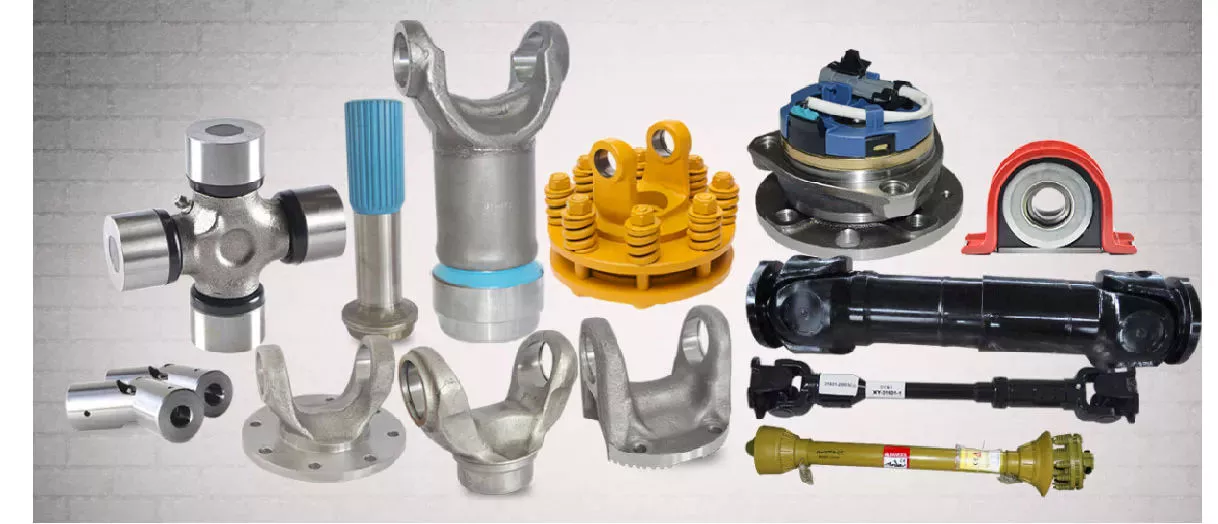
Are there different types of driveline configurations based on vehicle type?
Yes, there are different types of driveline configurations based on the type of vehicle. Driveline configurations vary depending on factors such as the vehicle’s propulsion system, drivetrain layout, and the number of driven wheels. Here’s a detailed explanation of the driveline configurations commonly found in different vehicle types:
1. Front-Wheel Drive (FWD):
In front-wheel drive vehicles, the driveline configuration involves the engine’s power being transmitted to the front wheels. The engine, transmission, and differential are typically integrated into a single unit called a transaxle, which is located at the front of the vehicle. This configuration simplifies the drivetrain layout, reduces weight, and improves fuel efficiency. Front-wheel drive is commonly found in passenger cars, compact cars, and some crossover SUVs.
2. Rear-Wheel Drive (RWD):
Rear-wheel drive vehicles have their driveline configuration where the engine’s power is transmitted to the rear wheels. In this setup, the engine is located at the front of the vehicle, and the drivetrain components, including the transmission and differential, are positioned at the rear. Rear-wheel drive provides better weight distribution, improved handling, and enhanced performance characteristics, making it popular in sports cars, luxury vehicles, and large trucks.
3. All-Wheel Drive (AWD) and Four-Wheel Drive (4WD):
All-wheel drive and four-wheel drive driveline configurations involve power being transmitted to all four wheels of the vehicle. These configurations provide better traction and handling in various driving conditions, particularly on slippery or off-road surfaces. AWD systems distribute power automatically between the front and rear wheels, while 4WD systems are often manually selectable and include a transfer case for shifting between 2WD and 4WD modes. AWD and 4WD configurations are commonly found in SUVs, crossovers, trucks, and off-road vehicles.
4. Front Engine, Rear-Wheel Drive (FR) and Rear Engine, Rear-Wheel Drive (RR):
In certain performance vehicles and sports cars, driveline configurations may involve a front engine with rear-wheel drive (FR) or a rear engine with rear-wheel drive (RR). FR configurations have the engine located at the front of the vehicle, transmitting power to the rear wheels. RR configurations have the engine located at the rear, driving the rear wheels. These configurations provide excellent balance, weight distribution, and handling characteristics, resulting in enhanced performance and driving dynamics.
5. Other Configurations:
There are also various specialized driveline configurations based on specific vehicle types and applications:
- Mid-Engine: Some high-performance sports cars and supercars feature a mid-engine configuration, where the engine is positioned between the front and rear axles. This configuration offers exceptional balance, handling, and weight distribution.
- Front-Engine, Front-Wheel Drive (FF): While less common, certain compact and economy cars employ a front-engine, front-wheel drive configuration. This layout simplifies packaging and interior space utilization.
- Part-Time 4WD: In certain off-road vehicles, there may be a part-time 4WD driveline configuration. These vehicles typically operate in 2WD mode but can engage 4WD when additional traction is needed.
These are some of the driveline configurations commonly found in different vehicle types. The choice of driveline configuration depends on factors such as the vehicle’s intended use, performance requirements, handling characteristics, and specific design considerations.
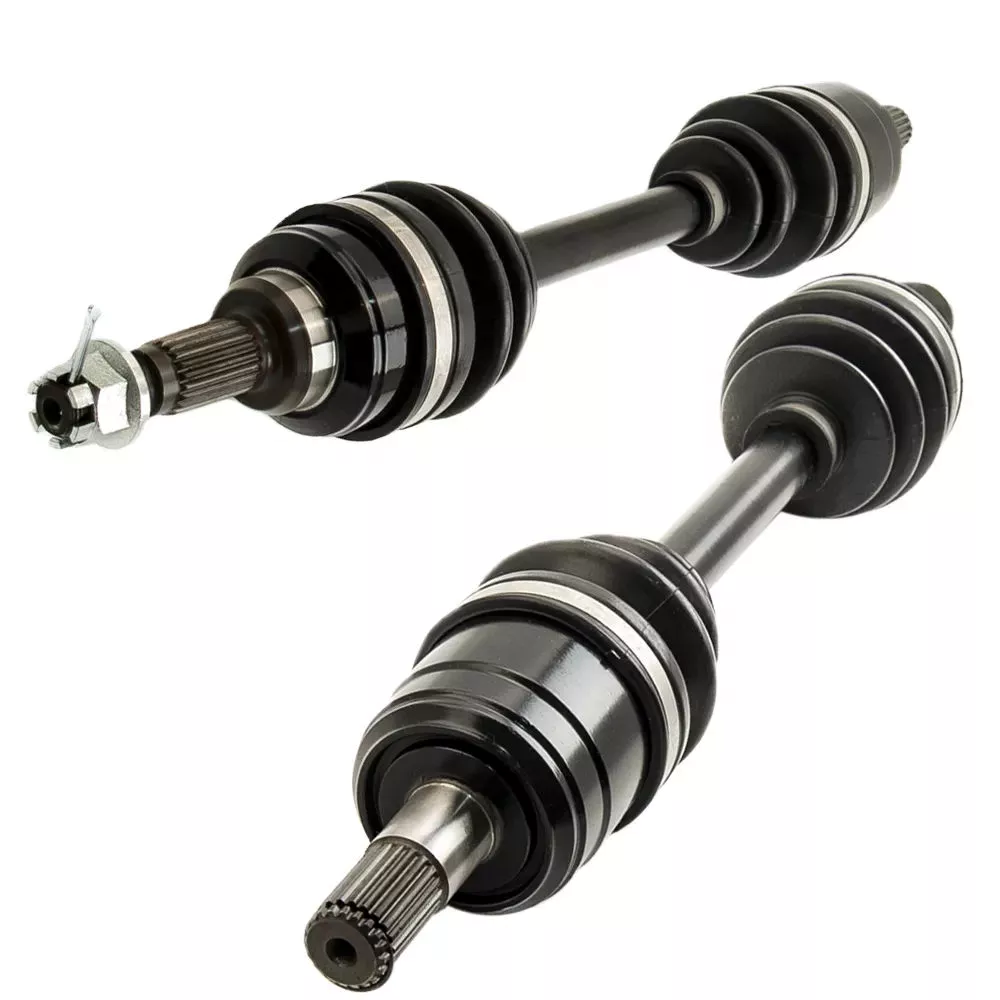
Can driveline components be customized for specific vehicle or equipment requirements?
Yes, driveline components can be customized to meet specific vehicle or equipment requirements. Manufacturers and suppliers offer a range of options for customization to ensure optimal performance, compatibility, and integration with different vehicles or equipment. Customization allows for tailoring the driveline components to specific powertrain configurations, operating conditions, torque requirements, and space constraints. Let’s explore the details of customization for driveline components:
1. Powertrain Configuration:
Driveline components can be customized to accommodate different powertrain configurations. Whether it’s a front-wheel drive, rear-wheel drive, or all-wheel drive system, manufacturers can design and provide specific components such as differentials, gearboxes, and drive shafts that are compatible with the required power distribution and torque transfer characteristics of the particular configuration.
2. Torque Capacity:
Driveline components can be customized to handle specific torque requirements. Different vehicles or equipment may have varying torque outputs based on their intended applications. Manufacturers can engineer and produce driveline components with varying torque-handling capabilities to ensure reliable and efficient power transmission for a range of applications, from passenger vehicles to heavy-duty trucks or machinery.
3. Size and Configuration:
Driveline components can be customized in terms of size, shape, and configuration to fit within the space constraints of different vehicles or equipment. Manufacturers understand that each application may have unique packaging limitations, such as limited available space or specific mounting requirements. Through customization, driveline components can be designed and manufactured to align with these specific dimensional and packaging constraints.
4. Material Selection:
The choice of materials for driveline components can be customized based on the required strength, weight, and durability characteristics. Different vehicles or equipment may demand specific material properties to optimize performance, such as lightweight materials for improved fuel efficiency or high-strength alloys for heavy-duty applications. Manufacturers can provide customized driveline components with materials selected to meet the specific performance and operational requirements.
5. Performance Optimization:
Driveline components can be customized to optimize performance in specific applications. Manufacturers can modify aspects such as gear ratios, differential configurations, or clutch characteristics to enhance acceleration, traction, efficiency, or specific performance attributes based on the intended use of the vehicle or equipment. This customization ensures that the driveline components are tailored to deliver the desired performance characteristics for the specific application.
6. Specialized Applications:
For specialized applications, such as off-road vehicles, racing cars, or industrial machinery, driveline components can be further customized to meet the unique demands of those environments. Manufacturers can develop specialized driveline components with features like enhanced cooling, reinforced construction, or increased torque capacity to withstand extreme conditions or heavy workloads.
Overall, customization of driveline components allows manufacturers to meet the specific requirements of different vehicles or equipment. From powertrain configuration to torque capacity, size and configuration, material selection, performance optimization, and specialized applications, customization ensures that driveline components are precisely designed and engineered to achieve the desired performance, compatibility, and integration with specific vehicles or equipment.

Can you explain the components of a typical driveline and their specific roles?
A typical driveline consists of several components that work together to transmit power from the engine or power source to the driven components, enabling motion and providing torque. Each component plays a specific role in the driveline system. Here’s an explanation of the key components of a typical driveline and their specific roles:
1. Engine: The engine is the power source of the driveline system. It converts fuel energy (such as gasoline or diesel) into mechanical power by the process of combustion. The engine generates rotational power, which is transferred to the driveline to initiate power transmission.
2. Transmission: The transmission is responsible for selecting the appropriate gear ratio and transmitting power from the engine to the driven components. It allows the driver or operator to control the speed and torque output of the driveline. In manual transmissions, the driver manually selects the gears, while in automatic transmissions, the gear shifts are controlled by the vehicle’s computer system.
3. Drive Shaft: The drive shaft, also known as a propeller shaft or prop shaft, is a tubular component that transmits rotational power from the transmission to the differential or the driven components. It typically consists of a hollow metal tube with universal joints at both ends to accommodate variations in driveline angles and allow for smooth power transfer.
4. Differential: The differential is a gearbox-like component that distributes power from the drive shaft to the wheels or driven axles while allowing them to rotate at different speeds, particularly during turns. It compensates for the difference in rotational speed between the inner and outer wheels in a turn, ensuring smooth and controlled operation of the driveline system.
5. Axles: Axles are shafts that connect the differential to the wheels. They transmit power from the differential to the wheels, allowing them to rotate and generate motion. In vehicles with independent suspension, each wheel typically has its own axle, while in solid axle configurations, a single axle connects both wheels on an axle assembly.
6. Clutch: In manual transmission systems, a clutch is employed to engage or disengage the engine’s power from the driveline. It allows the driver to smoothly engage the engine’s power to the transmission when shifting gears or coming to a stop. By disengaging the clutch, power transmission to the driveline is temporarily interrupted, enabling gear changes or vehicle stationary positions.
7. Torque Converter: Torque converters are used in automatic transmissions to transfer power from the engine to the transmission. They provide a fluid coupling between the engine and transmission, allowing for smooth power transmission and torque multiplication. The torque converter also provides a torque amplification effect, which helps in vehicle acceleration.
8. Universal Joints: Universal joints, also known as U-joints, are flexible couplings used in the driveline to accommodate variations in angles and misalignments between the components. They allow for the smooth transmission of power between the drive shaft and other components, compensating for changes in driveline angles during vehicle operation or suspension movement.
9. Constant Velocity Joints (CV Joints): CV joints are specialized joints used in some drivelines, particularly in front-wheel-drive and all-wheel-drive vehicles. They enable smooth power transmission while accommodating variations in angles and allowing the wheels to turn at different speeds. CV joints maintain a constant velocity during rotation, minimizing vibrations and power losses.
10. Transfer Case: A transfer case is a component found in four-wheel-drive and all-wheel-drive systems. It transfers power from the transmission to both the front and rear axles, allowing all wheels to receive power. The transfer case usually includes additional components such as a multi-speed gearbox and differential mechanisms to distribute power effectively to the axles.
These are the key components of a typical driveline and their specific roles. Each component is crucial in transferring power, enabling motion, and ensuring the smooth and efficient operation of vehicles and equipment.


editor by CX 2024-04-23