Product Description
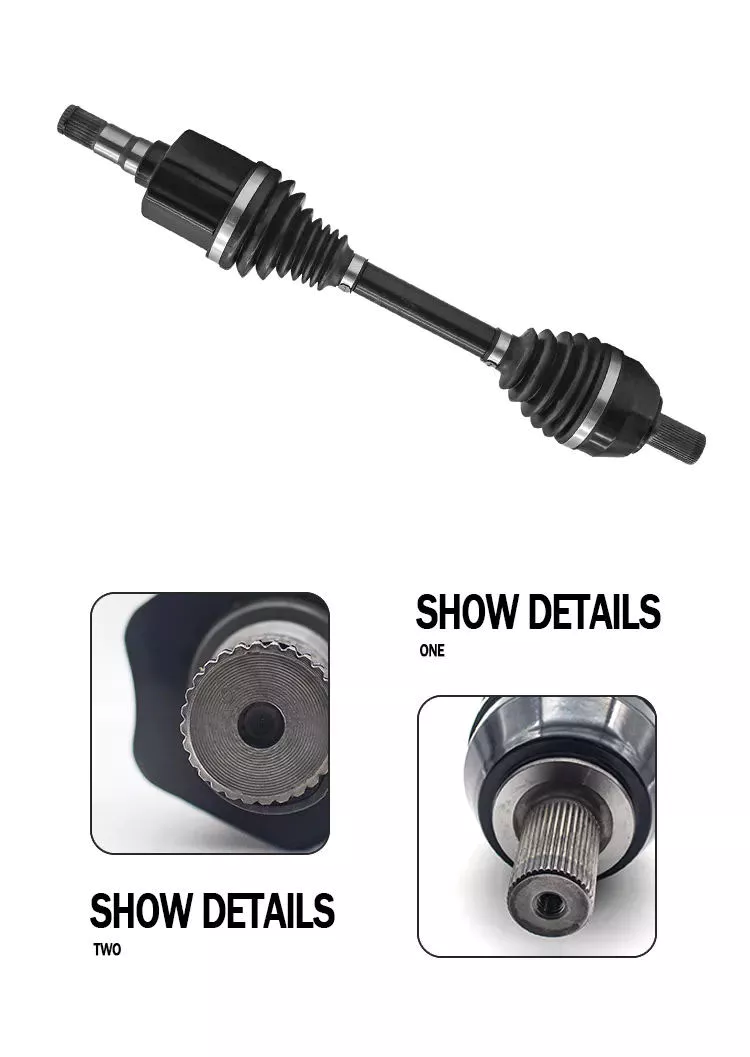
Tractor PTO Gearbox Male Shaft for big power land leveler
The Gearboxes are designed for connecting gear pumps to farm tractor power take offs (PTO).Output speed of power take offs is 540rpm which can be compared with the proper running speeds of hydraulic pumps.Different input running speeds can also be suitable,provided that the PTO gearbox output speed does not exceed 3000 rpm.
Gears
Made in Steel CHINAMFG 18 PCR M03.Stub teeth guarantee very high resistance and run very quietly.
Shafts
Made in steel CHINAMFG 16 CRN4.They are coupled with splined gears and are designed to stand the torque values stated in the catalogue.
Lubrication
SAE 90 gear oil must be put in the pto gearbox prior to use, change the oil after the first 60-80 hours and then every 12 months or 1500 hours which ever falls first.
Maintenance
Please check the oil level via the special oil window every 50 hours.Working temperatures should not exceed 120 degrees celcius under continuos duty cycle.
Production&Packaging & Shipping
Plastic bag packing for 1 piece / two pieces in 1 exporting carton / 100 cartons put on a pallet
product/mFeTsdHKAAbn/China-Speed-Multiplier-Gearbox-Kmt7001-for-Agricultural-Machinery.html
FAQ
1.Q:Is your company a trading company or a manufacturer?
A:Our company is a trading company also a manufacturer, we have our own factory to produce gearbox, pump support..Etc
Also we distribute gear pumps, tractor machinery,dump truck pump from selected premium suppliers to meet customers’ variable demand.
2.Q:What about the quality control and warranty ?
A:”Quality first, Customers foremost”.Every piece of products is cheeked and tested strictly 1 by 1 before packing and shipping.
Our products have 1 year warranty, technical support is endless from us.
3.Q:Can you provide samples for checking and testing?
A:Yes,we provide free samples for checking the build quality and real performance of our products,the freight need to be coverd by customer.
4.Q:How can I get to your company?
A:Our company address is No.888 Huaxu Road,Xihu (West Lake) Dis. district,ZheJiang ,China
It is about 30 minutes by car from ZheJiang Xihu (West Lake) Dis.ao airport or ZheJiang Xihu (West Lake) Dis.ao Railway station.
/* January 22, 2571 19:08:37 */!function(){function s(e,r){var a,o={};try{e&&e.split(“,”).forEach(function(e,t){e&&(a=e.match(/(.*?):(.*)$/))&&1
| Type: | Forest Machine |
|---|---|
| Usage: | Agricultural Products Processing, Farmland Infrastructure |
| Material: | Aluminum |
| Power Source: | Diesel |
| Weight: | 8.3kg |
| Transport Package: | Carton+Pallet |
| Samples: |
US$ 70/Piece
1 Piece(Min.Order) | |
|---|
| Customization: |
Available
| Customized Request |
|---|
How do manufacturers ensure the compatibility of PTO drivelines with diverse equipment?
Manufacturers employ various methods and considerations to ensure the compatibility of PTO (Power Take-Off) drivelines with diverse equipment. Here are the key factors they take into account:
1. Standardization:
– PTO drivelines are built according to standardized specifications and dimensions. Manufacturers adhere to industry standards and guidelines, such as those set by organizations like the American Society of Agricultural and Biological Engineers (ASABE) and the International Organization for Standardization (ISO). These standards define key parameters like shaft dimensions, connection types, torque ratings, and safety requirements. By following these standards, manufacturers ensure that their PTO drivelines can be easily interchanged and connected with diverse equipment that adheres to the same standards.
2. Compatibility Testing:
– Manufacturers conduct extensive compatibility testing to verify the performance and suitability of their PTO drivelines with different types of equipment. This testing involves connecting the drivelines to various implements, machines, and power sources to assess factors like power transfer efficiency, alignment, torque handling, and safety. Compatibility testing helps identify any issues or limitations that may arise when connecting the drivelines to different equipment. Manufacturers can then make necessary adjustments or recommendations to ensure optimal compatibility.
3. Application-Specific Design:
– Manufacturers often design PTO drivelines with specific applications in mind. They consider the requirements and operating conditions of various equipment categories, such as agricultural machinery, construction equipment, or industrial machinery. Manufacturers may offer different models or configurations of PTO drivelines tailored to these specific applications. For example, agricultural PTO drivelines may have features like enhanced dust resistance, rugged construction, and additional safety measures, while industrial PTO drivelines may prioritize high torque capacity and durability for heavy-duty applications. By designing drivelines with application-specific considerations, manufacturers ensure that their products meet the unique demands of diverse equipment types.
4. Consultation and Collaboration:
– Manufacturers maintain close relationships and collaborations with equipment manufacturers and suppliers. This collaboration allows them to exchange information about equipment requirements and driveline specifications. By understanding the specific needs of different equipment, manufacturers can develop PTO drivelines that align with those requirements. They may also provide technical support and guidance to equipment manufacturers regarding the selection and integration of PTO drivelines into their products. This consultation and collaboration foster compatibility and ensure that the drivelines are suitable for the intended equipment.
5. Documentation and Guidelines:
– Manufacturers provide detailed documentation, user manuals, and guidelines that outline the compatibility aspects of their PTO drivelines. These resources specify the recommended equipment types, connection methods, torque limits, and other important considerations for proper integration. Operators and equipment manufacturers can refer to these documents to ensure the compatibility of the PTO drivelines with diverse equipment. Manufacturers may also offer technical support or customer service channels to address any compatibility-related questions or concerns.
6. Ongoing Research and Development:
– Manufacturers continuously invest in research and development to improve the compatibility of their PTO drivelines with evolving equipment technologies. They stay updated with industry trends, technological advancements, and changing equipment requirements. This allows them to adapt and innovate their driveline designs, materials, and manufacturing processes to ensure ongoing compatibility with new and emerging equipment types and applications.
In summary, manufacturers ensure the compatibility of PTO drivelines with diverse equipment through standardization, compatibility testing, application-specific design, consultation and collaboration with equipment manufacturers, documentation and guidelines, and ongoing research and development. These efforts enable manufacturers to provide drivelines that effectively and safely interface with a wide range of equipment, promoting seamless integration and reliable power transfer.

How do PTO drivelines enhance the performance of tractors and agricultural equipment?
PTO (Power Take-Off) drivelines play a crucial role in enhancing the performance of tractors and agricultural equipment. By providing a reliable and versatile power source, PTO drivelines improve the functionality, efficiency, and productivity of agricultural machinery. Here are several ways in which PTO drivelines enhance the performance of tractors and agricultural equipment:
1. Power Versatility:
– PTO drivelines enable tractors and agricultural equipment to utilize a wide range of power-driven implements and attachments. By connecting to the PTO shaft of a tractor, implements such as mowers, tillers, seeders, and balers can be powered directly, eliminating the need for separate engines or motors. This versatility allows farmers to perform multiple tasks using a single power source, reducing equipment redundancy and increasing operational efficiency.
2. Increased Efficiency:
– PTO drivelines contribute to increased efficiency by providing a direct power transfer mechanism. The driveline ensures minimal power loss during transmission, resulting in more efficient utilization of available power. This efficiency leads to improved performance and reduced fuel consumption, ultimately optimizing resource utilization and lowering operating costs.
3. Flexibility in Equipment Usage:
– PTO drivelines offer flexibility in equipment usage by allowing quick and easy attachment and detachment of implements. Farmers can rapidly switch between different implements, tailoring the equipment to suit specific tasks and field conditions. This flexibility enhances productivity as it reduces downtime associated with changing equipment, enabling farmers to adapt to changing agricultural needs efficiently.
4. Time Savings:
– PTO drivelines contribute to time savings by enabling faster and more efficient completion of agricultural tasks. Machinery powered by PTO drivelines can operate at higher speeds and cover larger areas, reducing the time required for tasks such as mowing, tilling, planting, and harvesting. Additionally, the direct power transfer provided by PTO drivelines eliminates the need for manual labor or slower power transmission methods, further enhancing productivity and time efficiency.
5. Enhanced Capability:
– PTO drivelines enhance the capability of tractors and agricultural equipment by enabling them to handle a broader range of tasks and operate specialized implements. For example, PTO-driven sprayers allow precise and efficient spraying of fertilizers and pesticides, ensuring optimal crop health. PTO-driven balers enable efficient baling and packaging of hay or other forage materials. The versatility and enhanced capability provided by PTO drivelines allow farmers to expand their operations and achieve higher levels of productivity.
6. Consistent Power Delivery:
– PTO drivelines ensure consistent power delivery to agricultural equipment, resulting in consistent and uniform operation. The power from the tractor or power source is transmitted directly to the driven machinery, maintaining a steady power input. Consistent power delivery helps ensure optimum performance, reducing variations in output quality and minimizing the need for rework or adjustments.
7. Improved Safety:
– PTO drivelines contribute to improved safety by reducing the need for direct operator interaction with moving parts. Implements and machinery powered by PTO drivelines often have guards and safety features in place to protect operators from potential hazards. Additionally, the direct power transfer eliminates the need for manual belt or chain drives, reducing the risk of entanglement or mechanical failures.
8. Advanced Technology Integration:
– PTO drivelines enable the integration of advanced technologies and features into agricultural equipment. For example, PTO-driven machinery can incorporate precision farming technologies, such as GPS guidance systems, automatic controls, and variable-rate application capabilities. These technologies enhance accuracy, efficiency, and input optimization, resulting in improved performance and increased yields.
Overall, PTO drivelines significantly enhance the performance of tractors and agricultural equipment by providing a versatile power source, increasing efficiency, enabling flexibility in equipment usage, saving time, enhancing capability, ensuring consistent power delivery, improving safety, and facilitating the integration of advanced technologies. These advantages contribute to increased productivity, improved operational effectiveness, and enhanced profitability in agricultural operations.

Which industries and applications commonly utilize PTO drivelines for power distribution?
PTO (Power Take-Off) drivelines are widely used in various industries and applications that require the distribution of rotational power from a power source to driven equipment. The versatility and efficiency of PTO drivelines make them suitable for a range of tasks across different sectors. Let’s explore some of the industries and applications that commonly utilize PTO drivelines:
1. Agriculture:
The agriculture industry extensively relies on PTO drivelines for power distribution. Tractors equipped with PTO drivelines are commonly used to operate a wide array of implements and machinery, such as mowers, balers, harvesters, sprayers, seeders, and spreaders. PTO drivelines enable efficient power transmission for tasks like cutting, baling, spraying, planting, and spreading, contributing to the overall productivity and effectiveness of agricultural operations.
2. Construction and Earthmoving:
In the construction and earthmoving industry, PTO drivelines are utilized in heavy machinery for tasks such as excavating, grading, and material handling. Equipment like backhoes, loaders, and skid-steer loaders may feature PTO drivelines to power attachments like augers, trenchers, and hydraulic hammers. This enables these machines to perform a variety of functions efficiently, enhancing productivity on construction sites.
3. Forestry:
Forestry operations often employ PTO drivelines for power distribution in equipment used for wood processing, chipping, and mulching. Forestry mulchers, wood chippers, and stump grinders are commonly driven by PTO drivelines, allowing them to convert trees and wood waste into manageable sizes or mulch. PTO drivelines provide the necessary power to these machines, enabling efficient and effective forestry operations.
4. Landscaping and Groundskeeping:
The landscaping and groundskeeping industry extensively uses PTO drivelines for power distribution in equipment like lawn mowers, rotary cutters, and turf aerators. PTO-powered mowers can cover large areas efficiently, while rotary cutters are used for clearing brush and rough vegetation. Turf aerators equipped with PTO drivelines help maintain healthy lawns by improving soil aeration. PTO drivelines contribute to the performance and productivity of landscaping and groundskeeping tasks.
5. Utility and Municipal Services:
PTO drivelines find applications in utility and municipal services, where various equipment is used for maintenance and operations. Street sweepers, snow blowers, salt spreaders, and sewer cleaners often rely on PTO drivelines for power distribution. These machines can efficiently perform their respective tasks, such as cleaning streets, removing snow, spreading de-icing material, and maintaining sewer systems.
6. Industrial and Manufacturing:
In the industrial and manufacturing sectors, PTO drivelines are utilized in machinery and equipment for power distribution. Industrial mixers, pumps, generators, and compressors often incorporate PTO drivelines to transfer rotational power efficiently. This enables these machines to perform their specific functions, such as mixing materials, pumping fluids, generating electricity, or compressing air.
These are just a few examples of the industries and applications that commonly utilize PTO drivelines for power distribution. The versatility and efficiency of PTO drivelines make them suitable for a wide range of tasks, enabling power to be harnessed from a power source and efficiently distributed to driven equipment. PTO drivelines significantly contribute to the productivity and functionality of machinery in various sectors, enhancing overall operational efficiency.


editor by CX 2024-04-25