Product Description
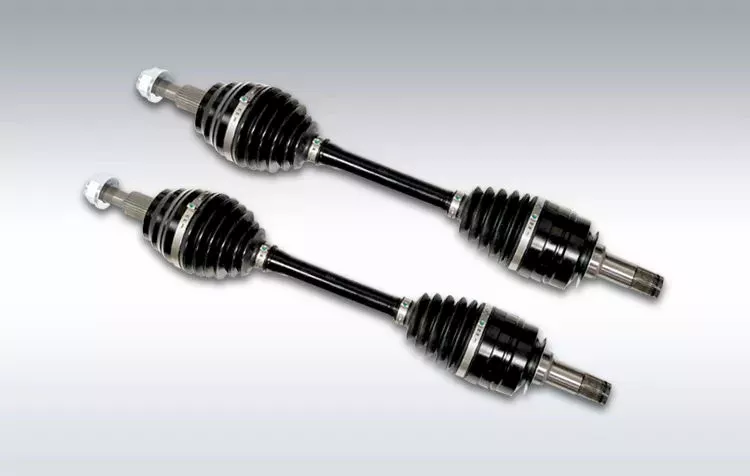
Transmission shaft
Product Description
| Product Name | Transmission shaft |
| Design | Can be at the customer’ request, tailor-made, at customer’s design |
| Advantage | ZJD can provide the transmission shaft according to customers technical specifications. |
Our Advantages
Application
Product Display
Company Profile
ZJD is located in Xihu (West Lake) Dis. Economic Development Zone, Xihu (West Lake) Dis. District, HangZhou, ZheJiang , which has very good transportation convenience and location advantages.ZJD own 1 subsidiary, which is located in HangZhou city, ZheJiang province, which is mainly responsible for EMU accessories for CRRC’s factory nearby.
ZJD’s production and office space is more than 12,000 square meters, and more than 60 sets of various types of CNC machining and quality control equipment.ZJD’s main products are widely used in CHINAMFG CR400, CR300, CR200 series standard EMUs, and expanded to subways, export passenger cars and EMUs and other products.
ZJD has more than 60 employees and more than 20 technical management personnel. The technical management team has many years of working experience in the rail transit industry.
Certifications
ZJD has obtained the national high-tech enterprise certification, 6 types of products have passed the high-tech certification, and related products have obtained more than 20 patents.
ZJD has established a comprehensive quality management system and has got ISO9001 quality management system certification, ISO/TS 22163 (IRIS) international railway industry standard certification, EN15085-2 railway vehicles welding system certification, and CHINAMFG product supply service qualification certification.
FAQ
1. Who are we?
HangZhou ZJD Rail Equipment Co.,Ltd. was established in 2012, which is a professional manufacturer of rail equipment and accessories.
2. Are you a reliable supplier?
ZJD-Excellent Manufacturer focusing on the rolling stock industry
Provide full-process Design, Production, Testing and Service according to customer requirements.
3.What can you buy from us?
We have designed and supplied a series of products such an air duct systems, piping systerms, pneumatic control units,etc.The product are used in various fields such an EMUs,subways,locomotives,wagon engineering vehicles,etc.
4. What services can we provide?
Provide customized services of heavy industry products for special requirements.
Provide diversified parts and trade services such as port machinery, steel heavy industry, mining machinery, etc.
Provide customized products for new energy equipment
Provide key process technology solutions for special parts in the field of new energy equipment.
| Material: | Carbon Steel |
|---|---|
| Load: | Revolution Axis |
| Stiffness & Flexibility: | Flexible Shaft |
| Axis Shape: | Straight Shaft |
| Shaft Shape: | Real Axis |
| Appearance Shape: | Round |
| Customization: |
Available
| Customized Request |
|---|
How do PTO drivelines accommodate variations in length and connection methods?
PTO (Power Take-Off) drivelines are designed to accommodate variations in length and connection methods to provide flexibility and compatibility with different equipment and applications. Here’s how PTO drivelines achieve this:
1. Telescoping Design:
– PTO drivelines often feature a telescoping design, allowing for adjustable length. Telescoping drivelines consist of two or more shaft sections that can slide within one another, similar to a telescope. This design enables the driveline to extend or retract to match the required length for connecting the power source (e.g., tractor) to the implement. By adjusting the length, telescoping drivelines can accommodate variations in the distance between the power source and the implement, ensuring a proper fit and efficient power transfer.
2. Splined Connections:
– PTO drivelines commonly use splined connections to ensure secure and reliable power transmission. Splines are ridges or grooves on the driveline shaft and corresponding mating components. They provide a positive engagement and torque transfer between the driving and driven shafts. Splined connections allow for variations in length and also provide some flexibility in alignment. By sliding the shaft sections within the telescoping design, operators can align the splined connections to achieve proper engagement and compensate for small misalignments.
3. Shear Pins and Slip Clutches:
– PTO drivelines incorporate shear pins or slip clutches as safety devices to protect against sudden overloads or obstructions. Shear pins are designed to break when excessive torque is applied to the driveline, preventing damage to the driveline components. Slip clutches, on the other hand, allow for controlled slippage when a certain torque threshold is exceeded. These safety mechanisms not only protect the driveline but also accommodate slight variations in length and sudden changes in load. They provide a degree of flexibility and help prevent driveline damage in case of unexpected stress or resistance.
4. Interchangeable Components:
– PTO drivelines often utilize interchangeable components, such as yokes, couplings, and adapters, to accommodate different connection methods. These components allow for compatibility between the driveline and various implements or equipment. For example, driveline yokes are available in different sizes, styles, and connection types, such as round, square, or hexagonal bores. This interchangeability enables operators to select the appropriate components that match the connection methods used by their specific equipment, ensuring a secure and proper fit.
5. Manufacturer Specifications:
– PTO drivelines are designed and manufactured according to specific standards and guidelines provided by the manufacturers. These specifications outline the maximum and minimum length requirements, connection methods, torque ratings, and other parameters necessary for safe and efficient operation. Operators should refer to the manufacturer’s guidelines and recommendations to ensure that the driveline accommodates any variations in length and connection methods within the specified limits.
6. Customization and Adaptation:
– In some cases, PTO drivelines may require customization or adaptation to accommodate unique length or connection requirements. This can involve modifying the length of the driveline shafts, using different adapters or couplings, or even ordering custom-made driveline assemblies. Consulting with driveline manufacturers, equipment suppliers, or driveline specialists can help determine the best approach for accommodating specific variations in length and connection methods.
In summary, PTO drivelines accommodate variations in length and connection methods through telescoping designs, splined connections, shear pins, slip clutches, interchangeable components, and adherence to manufacturer specifications. These features ensure flexibility, compatibility, and reliable power transfer between the power source and the implement, regardless of the specific length or connection requirements of the equipment or application.

How do PTO drivelines handle fluctuations in load and torque during operation?
PTO (Power Take-Off) drivelines are designed to handle fluctuations in load and torque during operation to ensure efficient power transfer and protect the driveline components. Here are the key aspects of how PTO drivelines handle these fluctuations:
1. Torque Limiting Devices:
– PTO drivelines often incorporate torque limiting devices to protect against excessive torque and sudden fluctuations in load. These devices, such as shear pins, slip clutches, or overload clutches, are designed to disconnect or slip when the torque exceeds a predetermined limit. By disengaging or slipping, these devices prevent damage to the driveline components and the connected machinery. Once the torque returns to a safe level, the driveline can resume normal operation.
2. Torque Converters:
– Some PTO drivelines utilize torque converters to handle fluctuations in load and torque. Torque converters are fluid coupling devices that provide a smooth and gradual transfer of torque. They can absorb and dampen sudden changes in load, providing a buffer between the power source and the driven equipment. Torque converters can help minimize stress on the driveline components and reduce the impact of load fluctuations on the overall system.
3. Spring-Loaded Tensioners:
– PTO drivelines often incorporate spring-loaded tensioners to maintain proper tension in the driveline. These tensioners ensure that the driveline remains engaged and properly aligned during operation, even when there are fluctuations in load or torque. The spring-loaded mechanism allows the tensioner to automatically adjust and compensate for changes in tension, helping to minimize slack and ensure consistent power transmission.
4. Robust Driveline Components:
– PTO driveline components, such as shafts, universal joints, and yokes, are designed to be robust and capable of handling fluctuations in load and torque. They are typically manufactured using high-strength materials and undergo rigorous testing to ensure durability and performance. The driveline components are engineered to withstand the anticipated loads and torque variations encountered during operation, reducing the risk of failures or premature wear.
5. Proper Lubrication:
– Adequate lubrication of the driveline components is essential for handling load and torque fluctuations. Proper lubrication helps reduce friction, dissipate heat, and maintain smooth operation even under varying loads. Lubrication also contributes to the longevity and reliability of the driveline components by minimizing wear and preventing damage due to excessive friction. Regular lubrication maintenance according to the manufacturer’s recommendations is crucial for optimal performance.
6. Operator Skill and Awareness:
– The operator’s skill and awareness play a significant role in handling load and torque fluctuations in PTO drivelines. Operators should be trained to operate the equipment within safe load limits and to anticipate and respond to changes in load or torque. Proper monitoring of the equipment during operation can help identify any abnormal fluctuations and take appropriate action to prevent damage to the driveline components.
7. System Design and Engineering:
– PTO drivelines are designed and engineered with load and torque fluctuations in mind. System designers analyze the expected operating conditions and select appropriate driveline components and configurations to ensure reliable performance. Factors such as the anticipated load variations, duty cycles, and equipment requirements are considered during the design phase to create a driveline system that can handle the expected fluctuations in load and torque.
In summary, PTO drivelines handle fluctuations in load and torque through the use of torque limiting devices, torque converters, spring-loaded tensioners, robust driveline components, proper lubrication, operator skill and awareness, and thoughtful system design. These features and considerations contribute to the safe and efficient operation of PTO drivelines, allowing them to adapt to changing load conditions while protecting the driveline components and the connected machinery.
What is a PTO driveline and how does it function in agricultural and industrial machinery?
A PTO (Power Take-Off) driveline is a mechanical system used in agricultural and industrial machinery to transfer power from a power source, such as an engine or motor, to driven equipment or implements. It consists of several components that work together to transmit power efficiently and reliably. Let’s explore the key elements of a PTO driveline and how it functions in agricultural and industrial machinery:
1. Power Source:
The power source in a PTO driveline is typically an engine or motor, such as the one found in a tractor or industrial machine. It generates rotational power, which serves as the energy source for the entire system.
2. PTO Shaft:
The PTO shaft is a rotating shaft that extends from the power source to the driven equipment. It is designed to transmit power from the power source to the implement. The PTO shaft is connected to the power source at one end and to the driven equipment at the other end.
3. PTO Clutch:
The PTO clutch is a mechanism that allows the operator to engage or disengage the power transfer between the power source and the driven equipment. It is usually controlled by a lever or switch, enabling the operator to start or stop the power transmission as needed. The PTO clutch ensures that power is only transferred when required, providing control and safety during operation.
4. PTO Gearbox:
In some machinery, a PTO gearbox is used to adjust the speed and torque of the power transfer. The gearbox is situated between the power source and the PTO shaft. It contains a set of gears that can be switched or adjusted to modify the rotational speed and torque of the PTO shaft. This allows for the adaptation of power to suit different implements or tasks.
5. PTO Driven Equipment:
The driven equipment refers to the implements or machinery that receive power from the PTO driveline. In agricultural machinery, this can include equipment like plows, mowers, balers, seeders, and grain augers. In industrial machinery, it can involve devices such as pumps, generators, compressors, or conveyor systems. The PTO driveline provides the necessary power to drive these equipment and enable their intended functions.
Function in Agricultural Machinery:
In agricultural machinery, the PTO driveline plays a crucial role in powering various implements and equipment. When the PTO clutch is engaged, rotational power is transmitted from the tractor’s engine to the PTO shaft. The PTO shaft, in turn, transfers this power to the driven equipment, allowing it to perform its task. For example, a PTO-driven mower receives power through the PTO shaft, enabling it to rotate the cutting blades and mow the field. The PTO driveline provides a flexible and efficient means of powering agricultural implements, contributing to increased productivity and versatility in farming operations.
Function in Industrial Machinery:
In industrial machinery, the PTO driveline serves a similar purpose by transferring power from the main power source to various driven equipment. The PTO clutch is engaged to initiate power transfer, and the PTO shaft transmits rotational power to the driven equipment. This allows the equipment to perform its specific function. For example, in a pump application, the PTO driveline powers the pump, enabling it to generate fluid flow or pressure. In a conveyor system, the PTO driveline drives the conveyor belt, facilitating material transportation. The PTO driveline in industrial machinery ensures efficient power transmission, enabling the equipment to operate effectively in industrial settings.
Overall, the PTO driveline is a critical component in agricultural and industrial machinery, facilitating the transfer of power from a power source to driven equipment. By utilizing the PTO shaft, clutch, gearbox (if present), and other components, the PTO driveline provides a reliable and efficient means of power transmission, enhancing the functionality and performance of machinery in these sectors.


editor by CX 2023-12-11