Өнім сипаттамасы
Product Details
A coupling is a mechanical component that is used to firmly connect the driving shaft and driven shaft in different mechanisms together, rotate together, and transmit motion and torque. It is also sometimes used to connect shafts and other parts (e.g. gears, pulleys, etc.). It usually consists of 2 parts, which are connected by a key or clamping fit, respectively, and fastened at the 2 shaft ends. Couplings can compensate for deviations (including axial, radial, angular or combined offset) between 2 shafts due to inaccurate manufacturing and installation, deformation or thermal expansion during operation, as well as shock and vibration absorption. The most commonly used couplings have been standardized or normalized. In general, it is only necessary to select the type of coupling correctly and determine the type and size of the coupling. If necessary, check and calculate the carrying capacity of the vulnerable and weak links; When the rotational speed is high, it is necessary to check the centrifugal force on the outer edge and the deformation of the elastic element for balance detection.
Couplings are used to connect shafts in different mechanisms, mainly by rotation, thus transferring torque. Under the action of high-speed power, the coupling has the function of buffering and damping, and the coupling has good service life and working efficiency.
The function of the coupling
a device that connects 2 shafts or shafts with rotating parts and rotates together in the process of transmitting motion and power and does not break away under normal circumstances. Sometimes, it is also used as a safety device to prevent the connected parts from bearing excessive loads and play the role of overload protection. The coupling is installed between the active side and the passive side of the power transmission, which plays the role of transferring torque, compensating the installation deviation between shafts, absorbing equipment vibration and buffering load impact. One of the functions of couplings is to absorb and compensate for deviations between shafts through their own deformation. The greater the elasticity, the stronger the ability to absorb the deviation; The less flexibility you have, the less ability you have to absorb deviations. In general, the deviation between the shaft and the shaft can be divided into the following 3 aspects: The connection between the coupling and the peripheral equipment is achieved by inserting the shaft of the device into the shaft hole of the coupling.
1. The role of the coupling is to connect the 2 shafts in different mechanisms (drive shaft and driven shaft) to rotate and transmit torque together, and some couplings also have the role of buffering, damping and improving the dynamic performance of the shafting.
2. Eliminate the inertia of the radial force, connect the motor spindle with the load, and use a coupling to weaken the starting power when the motor starts.
3. Power conduction, transmission of power and torque (improve the performance of the transmission system)
4. Different degrees of vibration reduction and buffering
5. Disconnect when the load is too large to play a protective role
6. Good for maintenance
7. Change the drive direction
8. Concentricity correction (different degrees of axial, radial and angular compensation performance)
The types of couplings
Bellows coupling
The bellows coupling is composed of 2 hubs and thin-walled bellows that are welded or bonded together. The input end of the coupling structure is a clamping structure, and the pre-tightening force is generated by clamping screws, and the power input shaft is firmly connected with the clamping hoop. Flexible and rigid stainless steel bellows have the ability to correct radial, axial and angular deviations, transmit torque with zero backlash, and have different bushings designed to meet different equipment requirements.
A plum coupling
Plum coupling is a widely used coupling, elastomer is a balance accessory, can zero back backlash transfer torque and shock absorption. The different types of elastomers determine the characteristics of the entire drive system. Zero back backlash is achieved through a pre-pressure between the 2 coupling bushing and the elastomer. Its elastomer is usually composed of engineering plastics or rubber. Because elastomers have the function of buffering and reducing vibration, they are widely used in the case of strong vibration.
Safety coupling
The safety coupling mainly relies on the spring force and works with the shape, which can protect the adjacent drive components from damage caused by overload. Divided into synchronous type, stepping type 60°, failure protection type, closed. Features of a special butterfly spring system. No torque transfer is possible until the torque control nut is linked to the butterfly spring to apply pressure. The service life of the safety coupling is largely determined by the speed at which the coupling is disengaged and the holding time of the coupling. The safety coupling is not worn when it is engaged, does not require maintenance, and does not require additional refueling.
Rigid coupling
The rigid coupling is actually a torsional rigid coupling. Even under load, there is no turning clearance. Even if there is a deviation that creates a load, the rigid coupling is still rigid to transmit torque. Rigid couplings need to be used to connect 2 shafts in strict alignment without relative misalignment, so they are used less in motor test systems. Of course, if the relative displacement can be successfully controlled (the alignment accuracy is high enough), rigid coupling can also play an excellent role in the application. In particular, the small size rigid coupling has the advantages of light weight, ultra-low inertia and high sensitivity. In practical applications, rigid couplings have the advantages of maintenance-free, ultra-oil resistance and corrosion resistance.
Long shaft coupling
The standard length of the long-shaft coupling is up to 6 meters, and no intermediate support is required. The 2 ends are connected by high-performance stainless steel or high-strength aluminum, and the middle pipe is made of different materials such as steel, aluminum or carbon fiber. The allowable deviation range, speed and torque of the standard model should be reduced by 30%. The allowable working speed depends on the total length of the joint shaft and can also be adjusted according to demand.
Diaphragm coupling
Diaphragm couplings transfer torque by friction and diaphragm assembly, so there are no stress concentrations, backbacklash and micro-displacement that occur when torque is transferred through shoulder bolts. It has a near unlimited service life and increases the torsional rigidity of the individual components of the complete coupling, which can compensate for a variety of combined shaft assembly errors as a percentage of the total allowable error value listed in the data sheet. The sum of the percentages of the 3 errors cannot exceed 100%.
Өнім сипаттамасы
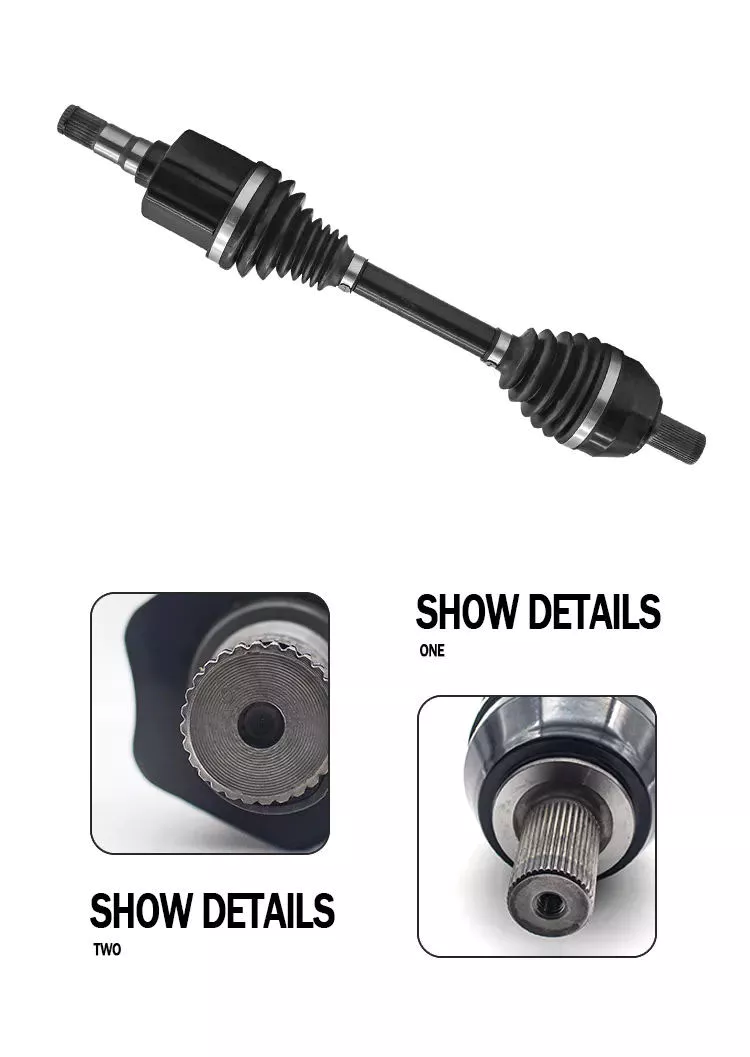
As a professional manufacturer for propeller shaft, we have +1000 items for all kinds of car, At present, our products are mainly sold in North America, Europe, Australia, South Korea, the Middle East and Southeast Asia and other regions, applicable models are European cars, American cars, Japanese and Korean cars, etc. /* October 22, 2571 15:47:17 */(()=>{function d(e,r){var a,o={};try{e&&e.split(“,”).forEach(function(e,t){e&&(a=e.match(/(.*?):(.*)$/))&&1
Өндірушілер әртүрлі көліктермен қозғалтқыш компоненттерінің үйлесімділігін қалай қамтамасыз етеді?
Өндірушілер әртүрлі көлік құралдарымен жүргізетін компоненттердің үйлесімділігін қамтамасыз ету үшін әртүрлі шараларды қолданады. Бұл шаралар әрбір көлік түрінің нақты талаптарын қанағаттандыру үшін мұқият жобалауды, инженерияны, сынақтан өткізуді және стандарттау процестерін қамтиды. Өндірушілердің үйлесімділікті қалай қамтамасыз ететінін қарастырайық:
1. Көлікке арналған дизайн:
Өндірушілер жетектің құрамдас бөліктерін белгілі бір көлік түрлерін ескере отырып жобалайды. Әрбір көлік түрі, мысалы, жеңіл автомобильдер, жүк көліктері, жол талғамайтын көліктер немесе коммерциялық көліктер, қуат шығысы, айналу моменті, салмақтың таралуы, кеңістік шектеулері және мақсатты пайдалану тұрғысынан бірегей талаптарға ие. Өндірушілер жетектің құрамдас бөліктерінің мақсатты көлік түрімен үйлесімділігіне оңтайландырылғанына көз жеткізу үшін компоненттерді жобалау кезеңінде осы факторларды ескереді.
2. Инженерия және модельдеу:
Өндірушілер қозғалтқыш компоненттерінің өнімділігі мен үйлесімділігін бағалау үшін озық инженерлік әдістер мен модельдеу құралдарын пайдаланады. Олар әртүрлі жұмыс жағдайларындағы компоненттердің мінез-құлқын модельдеу және талдау үшін компьютерлік көмекші жобалау (CAD) бағдарламалық жасақтамасын және ақырлы элементтерді талдау (FEA) модельдеуін пайдаланады. Бұл оларға шамадан тыс кернеу, тураланбау немесе кедергі сияқты кез келген ықтимал үйлесімділік мәселелерін анықтауға және өндіріс кезеңіне өтпес бұрын қажетті дизайн түзетулерін енгізуге мүмкіндік береді.
3. Прототиптеу және сынау:
Өндірушілер қозғалтқыш компоненттерінің прототиптерін жасайды және үйлесімділікті қамтамасыз ету үшін оларды қатаң сынақтан өткізеді. Бұл сынақтарға стендтік сынақ, динамометрлік сынақ және көлік деңгейіндегі сынақ кіреді. Нақты жұмыс жағдайларын модельдеу арқылы өндірушілер компоненттердің өнімділігін, беріктігі мен үйлесімділігін бағалай алады. Олар компоненттердің талаптарға сай келетініне және мақсатты көлік құралымен үйлесімді екеніне көз жеткізу үшін қуат беру тиімділігі, айналу моменті, жылу тарату, шу мен діріл деңгейлері және жалпы жүргізу мүмкіндігі сияқты факторларды бағалайды.
4. Стандарттау:
Өндірушілер жетек компоненттерінің үйлесімділігі мен ауыстырымдылығын қамтамасыз ету үшін салалық стандарттар мен техникалық сипаттамаларды ұстанады. Бұл стандарттар өлшемдер, материалдық қасиеттер, шплайн профильдері, білік диаметрлері және бекіту интерфейстері сияқты әртүрлі аспектілерді қамтиды. Белгіленген стандарттарды сақтау арқылы өндірушілер өздерінің жетек компоненттерінің әртүрлі өндірушілердің әртүрлі көліктеріне біркелкі интеграциялануын қамтамасыз ете алады, бұл үйлесімділікті және ауыстыруды немесе жаңартуды жеңілдетеді.
5. Бірлескен даму:
Өндірушілер үйлесімділікті қамтамасыз ету үшін әзірлеу процесінде көлік өндірушілерімен тығыз ынтымақтастықта болады. Бұл ынтымақтастық сипаттамаларды, жобалау талаптарын және өнімділік мақсаттарын бөлісуді қамтиды. Бірлесіп жұмыс істеу арқылы беріліс қорабының өндірушілері өздерінің құрамдас бөліктерінің дизайнын көлік өндірушісінің сипаттамаларына сәйкестендіріп, беріліс қорабының компоненттерінің көліктің кеңістіктік шектеулеріне, жұптасу интерфейстеріне және мақсатты пайдалануына сәйкес келетініне көз жеткізе алады. Бұл бірлескен тәсіл беріліс қорабының компоненттері мен көліктің жалпы жүйесі арасындағы үйлесімділік пен интеграцияны оңтайландыруға көмектеседі.
6. Үздіксіз жетілдіру:
Өндірушілер кері байланыс, далалық деректер және технологиядағы жетістіктер негізінде өздерінің қозғалтқыш компоненттерін үздіксіз жетілдіріп отырады. Олар кез келген үйлесімділік мәселелерін немесе өнімділік кемшіліктерін анықтау үшін көлік өндірушілерінен, соңғы пайдаланушылардан және кепілдік талаптарынан ақпарат жинайды. Бұл кері байланыс циклі қозғалтқыш компоненттерін жобалауда, өндіріс процестерінде және материалды таңдауда жетілдірулер мен жақсартуларды жүргізуге көмектеседі, бұл болашақ нұсқаларда жақсы үйлесімділік пен өнімділікті қамтамасыз етеді.
Жалпы алғанда, өндірушілер көлік құралдарына тән дизайн, инженерия және модельдеу, прототиптеу және сынау, стандарттау, бірлескен әзірлеу және үздіксіз жетілдіру үйлесімін қолданады, бұл жетек компоненттерінің әртүрлі көліктермен үйлесімділігін қамтамасыз етеді. Бұл күш-жігер қуат берілісін, сенімділікті және өнімділікті оңтайландыруға көмектеседі, сонымен қатар жетек компоненттерінің нарықтағы әртүрлі көлік түрлеріне үздіксіз интеграциялануын қамтамасыз етеді.

How do drivelines handle variations in speed and direction during operation?
Drivelines are designed to handle variations in speed and direction during operation, enabling the efficient transfer of power from the engine to the wheels. They employ various components and mechanisms to accommodate these variations and ensure smooth and reliable power transmission. Let’s explore how drivelines handle speed and direction variations:
1. Transmissions:
Transmissions play a crucial role in managing speed variations in drivelines. They allow for the selection of different gear ratios to match the engine’s torque and speed with the desired vehicle speed. By shifting gears, the transmission adjusts the rotational speed and torque delivered to the driveline, enabling the vehicle to operate effectively at various speeds. Transmissions can be manual, automatic, or continuously variable, each with its own mechanism for achieving speed variation control.
2. Clutches:
Clutches are used in drivelines to engage or disengage power transmission between the engine and the driveline components. They allow for smooth engagement during startup and shifting gears, as well as for disconnecting the driveline when the vehicle is stationary or the engine is idling. Clutches facilitate the control of speed variations by providing a means to temporarily interrupt power flow and smoothly transfer torque between rotating components.
3. Differential:
The differential is a key component in drivelines, particularly in vehicles with multiple driven wheels. It allows the wheels to rotate at different speeds while maintaining power transfer. When a vehicle turns, the inside and outside wheels travel different distances and need to rotate at different speeds. The differential allows for this speed variation by distributing torque between the wheels, ensuring smooth operation and preventing tire scrubbing or driveline binding.
4. Universal Joints and CV Joints:
Universal joints and constant velocity (CV) joints are used in drivelines to accommodate variations in direction. Universal joints are typically employed in drivelines with a driveshaft, allowing for the transmission of rotational motion even when there is an angular misalignment between the driving and driven components. CV joints, on the other hand, are used in drivelines that require constant velocity and smooth power transfer at varying angles, such as front-wheel drive vehicles. These joints allow for a consistent transfer of torque while accommodating changes in direction.
5. Transfer Cases:
In drivelines with multiple axles or drivetrains, transfer cases are used to distribute power and torque to different wheels or axles. Transfer cases are commonly found in four-wheel drive or all-wheel drive systems. They allow for variations in speed and direction by proportionally distributing torque between the front and rear wheels, or between different axles, based on the traction requirements of the vehicle.
6. Electronic Control Systems:
Modern drivelines often incorporate electronic control systems to further enhance speed and direction control. These systems utilize sensors, actuators, and computer algorithms to monitor and adjust power distribution, shift points, and torque delivery based on various inputs, such as vehicle speed, throttle position, wheel slip, and road conditions. Electronic control systems enable precise and dynamic management of speed and direction variations, improving traction, fuel efficiency, and overall driveline performance.
By integrating transmissions, clutches, differentials, universal joints, CV joints, transfer cases, and electronic control systems, drivelines effectively handle variations in speed and direction during operation. These components and mechanisms work together to ensure smooth power transmission, optimized performance, and enhanced vehicle control in a wide range of driving conditions and applications.

Әртүрлі қолданбаларда электр берілісі мен қозғалысқа жетек желілері қалай үлес қосады?
Жетек жетегі автомобиль көліктерін, ауылшаруашылық техникасын, құрылыс жабдықтарын және өнеркәсіптік жүйелерді қоса алғанда, әртүрлі қолданбаларда қуат беру мен қозғалыста маңызды рөл атқарады. Олар қозғалтқыштан немесе қуат көзінен жетектегі компоненттерге қуат беру, қозғалысты қамтамасыз ету және нақты тапсырмаларды орындау үшін қажетті момент беру үшін жауап береді. Жетек жетегі әртүрлі қолданбаларда қуат беру мен қозғалысқа қалай үлес қосатыны туралы егжей-тегжейлі түсініктеме берілген:
1. Автокөлік құралдары: Жеңіл автомобильдерде, жүк көліктерінде және мотоциклдерде жетек жүйелері қозғалтқыштан дөңгелектерге қуат береді, бұл қозғалыс пен қозғалысты қамтамасыз етеді. Жетек жүйесі қозғалтқыш, беріліс қорабы, жетек біліктері, дифференциалдар және осьтер сияқты компоненттерден тұрады. Қозғалтқыш отын жағу арқылы қуат өндіреді және бұл қуат беріліс қорабына беріледі. Беріліс қорабы тиісті беріліс қатынасын таңдайды және қуатты жетек біліктеріне береді. Жетек біліктері қуатты дифференциалдарға береді, олар оны дөңгелектерге таратады. Доңғалақтар өз кезегінде айналу қуатын сызықтық қозғалысқа айналдырады, көлікті алға немесе артқа жылжытады.
2. Ауыл шаруашылығы техникасы: Жетек жетегі тракторлар, комбайндар және егін жинау комбайндары сияқты ауыл шаруашылығы техникасында кеңінен қолданылады. Бұл машиналар жер жырту, топырақ өңдеу, егу және жинау сияқты әртүрлі тапсырмаларды орындау үшін қуат беруді қажет етеді. Ауыл шаруашылығы техникасындағы жетегі әдетте қуатты алу (PTO) блогынан, жетек біліктерінен, беріліс қораптарынан және құрал біліктерінен тұрады. PTO блогы трактор қозғалтқышына қосылады және қуатты жетек біліктеріне береді. Жетек біліктері қуатты беріліс қораптарына береді, олар оны әрі қарай құрал біліктеріне таратады. Құрал біліктері нақты ауыл шаруашылығы құралдарын басқарады, бұл оларға өздерінің мақсатты функцияларын орындауға мүмкіндік береді.
3. Құрылыс жабдықтары: Жетек жетегі экскаваторлар, тиегіштер, бульдозерлер және крандар сияқты құрылыс техникасында өте маңызды. Бұл машиналар қазу, көтеру, итеру және тарту сияқты тапсырмаларды орындау үшін қуат беруді қажет етеді. Құрылыс техникасындағы жетегі әдетте қозғалтқыштан, беріліс қорабынан, жетек біліктерінен, гидравликалық жүйелерден және әртүрлі беріліс механизмдерінен тұрады. Қозғалтқыш қуат өндіреді, ол беріліс қорабына беріледі. Беріліс қорабы гидравликалық жүйелермен және беріліс механизмдерімен бірге жабдықтың әртүрлі компоненттерін басқару үшін қуатты түрлендіреді және басқарады, бұл оларға өздерінің нақты функцияларын орындауға мүмкіндік береді.
4. Өнеркәсіптік жүйелер: Жетек жетегі өнеркәсіптік жүйелер мен машиналарда, соның ішінде конвейерлік жүйелерде, өндірістік жабдықтарда және ауыр жүк көтеретін машиналарда кеңінен қолданылады. Бұл қолданбалар материалдарды өңдеу, өңдеу және өндіру үшін қуат беруді қажет етеді. Өнеркәсіптік жүйелердегі жетегі көбінесе электр қозғалтқыштарын, беріліс қораптарын, жетек біліктерін, муфталарды және жетекті компоненттерді қамтиды. Электр қозғалтқышы айналмалы қуатты қамтамасыз етеді, ол машиналарды немесе конвейерлерді басқару үшін жетек жетегі компоненттері арқылы беріледі, бұл өнеркәсіптік жүйеде қажетті қозғалыс пен қуат беруді жеңілдетеді.
5. Электр энергиясын өндіру: Жетек желілері генераторлар мен турбиналар сияқты электр энергиясын өндіру қолданбаларында да қолданылады. Бұл жүйелер механикалық энергияны электр энергиясына айналдыру үшін қуат беруді қажет етеді. Электр энергиясын өндірудегі жетек желісі көбінесе генераторға қосылған іштен жану қозғалтқышы немесе бу турбинасы сияқты негізгі қозғалтқыштан тұрады. Муфталар, беріліс қораптары және жетек біліктері сияқты жетек жүйесінің компоненттері негізгі қозғалтқыштан айналмалы қуатты генераторға береді, ол оны электр қуатына айналдырады.
6. Теңіз және аэроғарыштық қолданыстар: Жетек жетегі теңіз кемелерінде және аэроғарыштық жүйелерде қозғалыс пен қозғалысты жеңілдету үшін қолданылады. Теңіз қолданбаларында жетек жетегі қозғалтқыштардан немесе турбиналардан қуатты пропеллерлерге немесе су ағындарына береді, бұл кеменің су арқылы қозғалуына мүмкіндік береді. Аэроғарыштық қолданбаларда жетек жетегі қозғалтқыштардан қуатты роторлар немесе пропеллерлер сияқты әртүрлі компоненттерге береді, бұл ұшу үшін қажетті тарту күшін қамтамасыз етеді.
Қорытындылай келе, жетек желілері кең ауқымды қолданбаларда қуат беру мен қозғалыстың ажырамас бөлігі болып табылады. Олар қуатты қозғалтқыштан немесе қуат көзінен жетектегі компоненттерге беруге мүмкіндік береді, бұл айналу моментін жасауға және нақты тапсырмаларды орындауға мүмкіндік береді. Жетек желілері автомобиль көліктерінде, ауыл шаруашылығы техникасында, құрылыс жабдықтарында, өнеркәсіптік жүйелерде, қуат өндіруде, теңіз және аэроғарыш салаларында маңызды рөл атқарады, тиімді қуат беру, қозғалыс және осы әртүрлі жүйелердің жалпы функционалдығына ықпал етеді.


editor by lmc 2024-11-25